5 New Manufacturing Technologies Worth Watching
Manufacturing is often described as a conservative industry, and it is, in the sense that factories value reliability and proven methods. But behind the scenes, a wave of new manufacturing technology is building. Every year, the frontier moves: machines get smarter, materials get stranger, and processes that seemed impossible become routine.
If you want to understand where manufacturing is headed, these are the five emerging trends worth watching right now. Each one is already working in real factories, and each one has the potential to reshape the industry over the next decade.
1. AI-Powered Quality Inspection
Quality control used to be a human job. Inspectors stared at parts, compared them to standards, and made judgment calls. It was skilled work, but it was also slow, inconsistent, and exhausting. The rise of AI-powered vision systems is changing quality inspection forever.
Modern inspection systems combine high-speed cameras with machine learning algorithms. The cameras capture images of every part as it passes, and the AI compares each image to a learned model of what a good part looks like. It can detect scratches, dents, color variations, dimensional errors, and subtle defects that human eyes miss, at speeds no human can match.
The key advantage of AI over traditional machine vision is adaptability. Conventional vision systems must be programmed with explicit rules for every defect type. AI systems learn from examples, so they can be trained on a few hundred good and bad parts and then generalize to catch defects the programmer never anticipated. When a new defect appears, the system can be retrained quickly.
The impact is measurable. Factories using AI inspection report defect detection rates above 99 percent, false rejection rates near zero, and the ability to inspect 100 percent of production rather than sampling. Quality data flows into the broader manufacturing system, enabling root cause analysis and continuous improvement. AI inspection is not a laboratory demo; it is a proven technology spreading through automotive, electronics, food, and pharmaceutical manufacturing.
2. Collaborative and Mobile Robots
Robots are leaving their cages. The second emerging trend is the rise of collaborative robots and mobile manipulators that work safely alongside humans, without safety fences and without specialist programmers.
Collaborative robots, or cobots, are the fastest-growing segment of industrial robotics. They are small, affordable, and safe enough to share a workbench with a person. They handle machine tending, pick and place, packaging, and assembly, taking over the repetitive tasks that cause injuries and boredom.
The next step is mobility. Mobile manipulators combine a robot arm with an autonomous mobile base, allowing the robot to move around the factory, between workstations and warehouses. A mobile robot can deliver parts, tend machines in different areas, and perform inspections anywhere in the plant. These systems are already operating in logistics and manufacturing, and they are becoming more capable every year.
What makes this trend powerful is the combination of robotics with AI. Modern robots have vision, learn by demonstration, and adapt to unstructured environments. The cost of entry is falling, and the skills required to deploy robots are dropping. Small factories that never considered automation are now adopting collaborative robots, and the robots are doing jobs that were unthinkable for traditional industrial machines.
3. Generative Design and Additive Manufacturing
The third trend is the combination of generative design with additive manufacturing, and it is producing parts that look like they come from another planet.
Generative design software starts with the requirements: the loads, materials, and manufacturing constraints. Then it explores thousands of possible designs, using simulation and optimization to find shapes that use material exactly where it is needed. The results are organic, lattice-filled geometries that are dramatically lighter and often stronger than conventionally designed parts.
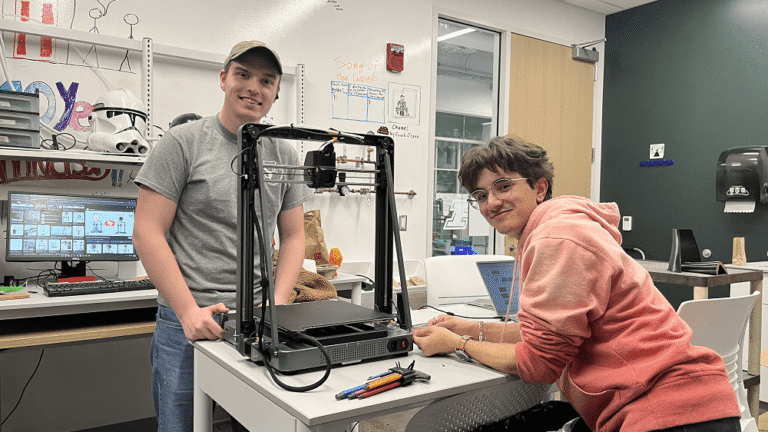
Additive manufacturing, or 3D printing, is what makes these designs buildable. The complex internal channels and lattice structures that generative algorithms produce are impossible to machine but straightforward to print. Metal 3D printing in titanium, aluminum, and nickel alloys turns the optimized shapes into production parts.
The results are impressive. Aerospace companies have cut part weight by 40 percent or more while consolidating assemblies into single printed components. Automotive and medical companies are following. The combination of generative design and additive manufacturing is still maturing, but it is already proving that the design freedom of the digital world can become physical reality.
4. Digital Twins for the Entire Factory
Digital twins, virtual replicas of physical systems, are moving from individual machines to whole factories, and this is the fourth trend worth watching.
A factory digital twin is a living simulation of the entire plant: equipment, processes, material flows, energy use, and even people. It is updated continuously with data from sensors, and it can simulate the future: what will happen if a machine fails, if an order changes, or if a line is reconfigured.
The applications are powerful. Factory twins support layout planning, allowing engineers to test new configurations virtually before moving a single machine. They support production scheduling, finding the optimal sequence for the current conditions. They support training, letting operators practice on a virtual factory. And they support energy optimization, identifying waste and testing improvements.
The technology is becoming more accessible as sensors get cheaper and cloud computing gets more powerful. A small manufacturer can now build a useful digital twin of a production line with off-the-shelf software. The factory twin is becoming a standard tool, not a research project, and it is giving manufacturers the ability to see the future before it happens.
5. Sustainable and Circular Manufacturing
The fifth trend is not a single technology but a transformation of the entire manufacturing model: the shift toward sustainability and circularity.
Traditional manufacturing is linear: take materials, make products, use them, throw them away. Circular manufacturing keeps materials in use: design for disassembly, remanufacture components, recycle materials, and eliminate waste. The drivers are regulatory pressure, customer demand, and simple economics, as raw material prices rise and supply chains become less predictable.
New technologies are enabling the transition. Design software now considers recyclability and disassembly from the start. Additive manufacturing enables repairs by printing replacement parts on demand instead of discarding whole products. Digital twins track materials through their lifecycle, making recycling viable. AI optimizes energy use, cutting the carbon footprint of production.
Energy is central to the trend. Factories are installing solar panels, recovering waste heat, and electrifying processes. Some advanced facilities operate as “eco-factories,” using digital technology to minimize energy and water consumption. The circular economy is moving from a slogan to an engineering discipline, and the factories that master it will have a lasting competitive advantage.
Why These Technologies Matter
These five new manufacturing technologies share a common thread: they are all about intelligence and efficiency. AI makes inspection smarter. Robotics makes labor more productive. Generative design and additive manufacturing make parts lighter and stronger. Digital twins make factories predictable. And circularity makes manufacturing sustainable.
They also reinforce each other. AI-powered robots are better than either technology alone. Generative designs feed additive machines. Digital twins collect the data that trains AI models. The combination of trends is greater than the sum of the parts.
For manufacturers, the message is not to chase every trend, but to understand which ones apply to their business and to start experimenting. The cost of entry is falling, and the risks of waiting are rising. The companies that adopt these emerging technologies early will gain experience, data, and competitive advantage that latecomers will struggle to match.
The Bottom Line
Manufacturing is changing faster than at any time since the digital revolution. AI-powered inspection, collaborative robots, generative design, digital twins, and circular manufacturing are not futuristic concepts; they are working technologies with real results.
The factory of tomorrow is being built today, one sensor, one algorithm, and one innovative process at a time. Whether you are an engineer, an executive, or an observer, these five trends deserve your attention. They are the new manufacturing technology shaping the industry, and the companies that embrace them will define the next era of making things.