3D Printing Technologies Compared: FDM, SLA, SLS, and SLM
Not long ago, “3D printing” meant one thing: a desktop machine squeezing melted plastic through a nozzle. Today, the term covers a family of very different technologies that build objects from digital files, and the differences between them matter enormously. The machine that prints a plastic prototype on your desk shares almost nothing with the machine that prints a titanium hip implant or a jet engine part, except the basic idea of adding material layer by layer.
If you are trying to choose a 3D printing technology, the acronyms can be overwhelming: FDM, SLA, SLS, SLM, DLP, MJF, EBM. This 3D printing technologies comparison will focus on the four most important, FDM, SLA, SLS, and SLM, and explain what each one is good at, what it costs, and when to use it.
FDM: The Friendly Desktop Workhorse
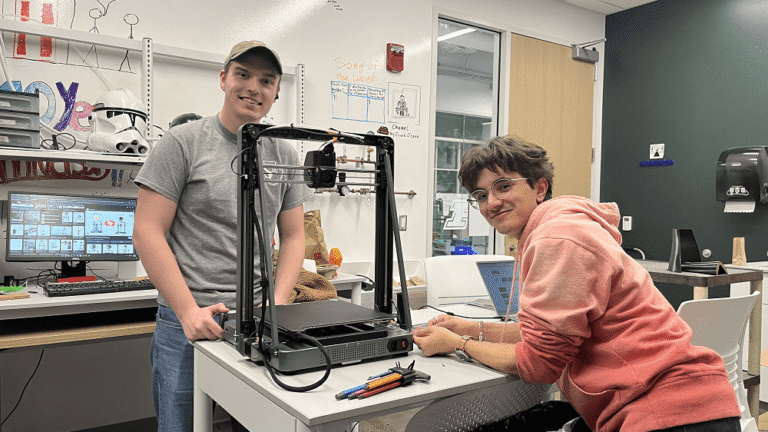
Fused deposition modeling, or FDM, is the technology most people picture when they hear “3D printing.” It works like a computer-controlled glue gun. A spool of plastic filament is fed into a heated nozzle, melted, and squeezed out in thin lines. The nozzle moves back and forth, drawing the shape of one layer, then the print bed drops slightly, and the next layer is drawn on top.
FDM is the cheapest and most accessible 3D printing technology. Desktop FDM printers range from a few hundred to a few thousand dollars, which is why they dominate hobbyist, educational, and prototyping markets. The materials, like PLA, ABS, PETG, and nylon, are inexpensive and widely available.
FDM’s strengths are cost, material variety, and ease of use. It is perfect for functional prototypes, jigs and fixtures, enclosures, and parts that need to be tough. It can print in strong materials like nylon and polycarbonate, and even carbon-fiber-filled composites.
The weaknesses of FDM are resolution and surface finish. The layer lines are visible, the parts are not watertight without post-processing, and fine details are limited by the nozzle size. FDM parts are also anisotropic, meaning they are weaker in one direction, so they are not ideal for structural applications. But for everyday prototyping, FDM is the practical champion.
SLA: The Precision Detail Master
Stereolithography, or SLA, was the first 3D printing technology ever invented, and it remains the best choice for fine detail. Instead of melted filament, SLA uses a liquid resin that hardens when exposed to light. A laser traces the shape of each layer across the surface of a resin vat, curing the resin into a solid, then the build platform rises and the next layer is traced.
SLA parts are famous for their smooth surfaces and crisp details. Layer lines are nearly invisible, and features as small as tens of microns can be reproduced. This makes SLA the go-to for jewelry patterns, dental models, injection mold prototypes, figurines, and any part where appearance matters.
The materials are photopolymer resins, and they come in a range of formulations: standard, tough, flexible, castable, and biocompatible. Dental and medical professionals use biocompatible SLA resins for surgical guides and custom models.
SLA’s downsides are brittleness, messiness, and post-processing. Standard resins are more brittle than FDM plastics, so functional parts need tough resin formulations. Uncured resin is sticky and must be washed off, and the parts require UV curing after printing. Resin is also more expensive than filament, and ventilation is recommended because the resin smells. For precision and surface quality, however, SLA is hard to beat.
SLS: The Industrial Production Printer
Selective laser sintering, or SLS, takes a completely different approach: it uses a laser to fuse powdered plastic. A thin layer of nylon or other thermoplastic powder is spread across the build chamber, and a laser traces the cross-section of the part, sintering, or partially melting, the powder particles together. The platform drops, another layer of powder is spread, and the process repeats.
The genius of SLS is that the unsintered powder supports the part during printing. There is no need for printed support structures, so parts can have complex internal features, moving assemblies, and interlocking geometry that would be impossible with FDM or SLA. At the end of the print, the part is simply dug out of the powder bed.
SLS parts are strong, durable, and isotropic, meaning their properties are consistent in all directions. This makes SLS the workhorse of industrial prototyping and short-run production. Nylon SLS parts are used for functional prototypes, snap-fit assemblies, hinges, ducts, and even end-use products.
The costs of SLS are higher, both for the machines, which start in the tens of thousands of dollars, and for the powder material. The process also requires more space and post-processing to remove excess powder. But for producing multiple parts in a single build, with no supports and excellent mechanical properties, SLS is one of the most efficient technologies available.
SLM: Metal Printing for Real Parts
Selective laser melting, or SLM, is the metal member of the family. It works like SLS, but instead of plastic powder, it fuses metal powder with enough energy to fully melt it, producing dense, solid metal parts. The same basic approach is also called laser powder bed fusion or DMLS.
SLM can print in a wide range of metals: titanium alloys, stainless steel, aluminum, nickel superalloys, and tool steels. The resulting parts are dense and strong, often matching or exceeding the properties of cast or forged metal. SLM is used for aerospace brackets, medical implants, custom tooling, and high-performance automotive parts.
The superpower of SLM is design freedom. Internal cooling channels, lattice structures, and organic geometries that cannot be machined or cast become possible. Engineers can consolidate assemblies into single printed parts and optimize weight without sacrificing strength.
SLM is the most expensive and demanding technology in this comparison. The machines cost hundreds of thousands of dollars, the metal powder is pricey, and the process requires careful parameter control, inert gas atmospheres, and extensive post-processing like support removal and heat treatment. But when you need a real metal part with complex geometry, SLM has no rival.
The Head-to-Head Comparison
Let’s put the four technologies side by side.
Cost: FDM is cheapest, followed by SLA, then SLS, with SLM by far the most expensive.
Surface quality and detail: SLA wins for fine details and smooth surfaces, with SLS close behind. FDM has visible layer lines, and SLM parts have a rough, grainy finish that often needs machining.
Mechanical strength: SLS and SLM produce the strongest parts. FDM is good but anisotropic, and SLA resins are more brittle.
Support structures: FDM and SLA usually need supports for overhangs. SLS and SLM use the powder bed itself, though metal parts still need anchors to prevent warping.
Production volume: SLS and SLM are well suited to batch production, with multiple parts nested in a single build. FDM and SLA are slower and better for one-offs and small batches.
Materials: FDM has the widest choice of affordable thermoplastics. SLA offers specialty resins. SLS is mostly nylon and nylon composites. SLM covers engineering metals.
How to Choose
Choosing among FDM, SLA, SLS, and SLM comes down to three questions: what material do you need, what quality do you need, and what is your budget?
If you need a cheap, tough prototype quickly, choose FDM. If you need a smooth, detailed part for appearance, fitting, or casting patterns, choose SLA. If you need strong, functional nylon parts without supports, and you are making several at once, choose SLS. If you need a real metal part with complex geometry, choose SLM.
Many companies use more than one technology. A typical workflow might be FDM for early concept models, SLA for detailed fit checks, SLS for functional prototypes, and SLM for production metal parts. Each technology earns its place in the toolbox.
The Bigger Picture
The 3D printing technologies comparison shows that there is no single “best” 3D printer, only the right tool for the job. The industry is still evolving fast: high-speed systems are making production more practical, multi-material printers are expanding design options, and new materials appear every year.
What unites FDM, SLA, SLS, and SLM is the fundamental promise of additive manufacturing: digital files become physical objects, layer by layer, with design freedom that subtractive manufacturing cannot match. Whether you are printing a phone case at home or a jet engine part in a factory, you are using the same core idea that has been transforming manufacturing for four decades. And knowing the differences between the technologies is the first step to using them well.