Subtractive vs Additive vs Formative: The Three Ways to Make Things
Every manufactured object on Earth, from a paperclip to a jet engine, was made using one of three fundamental approaches: subtractive manufacturing, additive manufacturing, or formative manufacturing. That may sound like an oversimplification, but it is true. All of human manufacturing can be sorted into these three categories, and once you understand them, you can look at any production process and instantly see what kind of manufacturing paradigm it belongs to.
The differences matter enormously for cost, design freedom, material use, and speed. In this guide, we will compare subtractive vs additive vs formative manufacturing, look at how each one works, and help you understand when to use which.
Subtractive Manufacturing: Start Big, Cut Down
Subtractive manufacturing is exactly what it sounds like: you start with a block of material and remove material until only the desired part remains. It is the oldest approach to making precise things, and it is still everywhere.
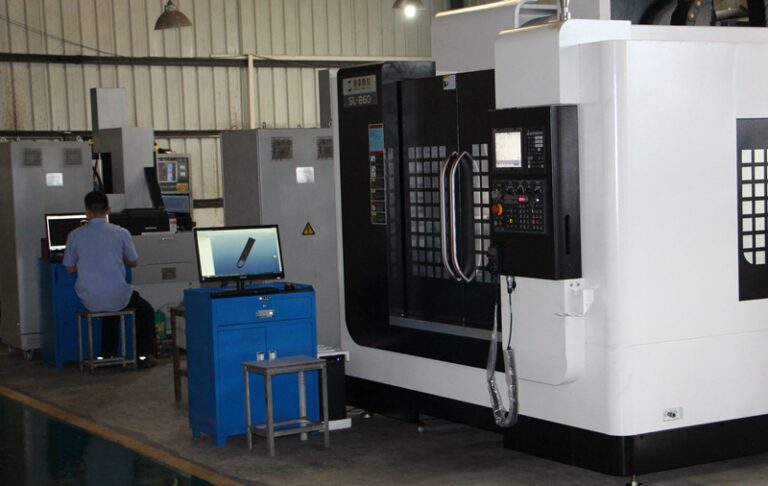
The classic example is CNC machining. A block of aluminum, steel, or plastic is clamped to a machine, and a spinning cutting tool carves away material according to a digital design. Milling, turning, drilling, and grinding are all subtractive processes. So are sawing, laser cutting, waterjet cutting, and electrical discharge machining, or EDM.
Subtractive manufacturing has three big advantages. First, the materials are nearly unlimited: any metal, plastic, wood, or composite that can be cut can be machined, and the material properties of a machined part are the same as the stock material. Second, the precision is outstanding. CNC machines routinely hold tolerances of a few microns, and machined parts have excellent surface finishes. Third, the parts are strong and reliable, because they are solid chunks of proven material.
The big weakness of subtractive manufacturing is waste. When you cut a part out of a block, the material that is cut away, often 80 percent or more of the block, becomes chips and scrap. The cost scales with the size of the block, not the size of the part. Subtractive manufacturing also struggles with complex internal geometry; a drill can only reach so far, and a milling cutter cannot carve inside a closed cavity.
Another limitation is setup. A complex machined part may require multiple operations, fixtures, and tools, each adding time and cost. For simple geometries at medium or high volumes, though, subtractive manufacturing remains the standard for precision and material quality.
Additive Manufacturing: Start Small, Build Up
Additive manufacturing, better known as 3D printing, takes the opposite approach. Instead of removing material, it adds material layer by layer, building the part from nothing. A digital model is sliced into thin layers, and the printer deposits, cures, or fuses material to recreate those layers one at a time.
There are many additive technologies, from FDM plastic printers to SLS nylon sintering to SLM metal melting. What unites them is the layer-by-layer principle, and that principle unlocks design freedom that subtractive manufacturing cannot match.
Additive manufacturing’s superpower is geometric complexity. Internal channels, lattice structures, undercuts, and organic shapes that would be impossible or absurdly expensive to machine can be printed directly. Assemblies can be consolidated: a part that used to be twenty components welded and bolted together can be printed as a single piece. Designers can optimize parts for strength and weight with structures that only additive manufacturing can produce.
Additive manufacturing also eliminates the waste problem. The material used is almost exactly the material in the part, with only support structures and powder overspray as losses. For expensive materials like titanium, that waste saving is huge.
The weaknesses are speed, cost, and consistency. Additive is generally slower than subtractive and formative processes for high volumes. Metal printing machines are expensive, and the parts often need post-processing like support removal, heat treatment, and machining of critical surfaces. Quality control is still maturing, and printed parts can have different properties than wrought or cast material.
For prototyping, customization, complex geometry, and low-volume production, additive manufacturing is transformative. For millions of simple parts, it is usually not the right tool.
Formative Manufacturing: Shape It by Force
Formative manufacturing is the third paradigm, and it is the most common in the world, even though it rarely gets the attention of its siblings. Formative processes shape material using force, heat, or a mold, without removing or adding material. The material simply changes shape.
Injection molding is formative: molten plastic is forced into a mold cavity and cools into the part shape. Casting is formative: molten metal is poured into a mold. Forging, stamping, extrusion, rolling, blow molding, and thermoforming are all formative processes. Even pressing a sheet of metal into a car body panel is formative.
Formative manufacturing’s superpower is speed and cost at scale. Once a mold or die exists, parts can be produced in seconds, with per-part costs that no other method can match. A single injection mold can produce millions of identical parts. The processes are also material efficient, since the material goes directly into the part with minimal scrap.
The weaknesses of formative manufacturing are upfront cost and design constraints. Tooling is expensive: a steel injection mold or forging die can cost tens of thousands to hundreds of thousands of dollars. The part design must respect the process, with draft angles, uniform wall thicknesses, and features that can be formed and ejected. Design changes after tooling is built are very expensive.
Formative manufacturing also tends to lock in geometry. Every new part shape needs new tooling, so formative processes make sense when you need huge volumes of a stable design.
The Head-to-Head Comparison
Now let’s compare subtractive vs additive vs formative manufacturing across the dimensions that matter.
Design freedom: Additive wins. It can create geometries no other method can. Formative and subtractive are both constrained, though formative is usually more constrained by draft and parting lines.
Material properties: Subtractive wins, because the part is the same material as the stock. Formative parts can be excellent, especially forged parts with grain flow, and additive parts are improving but still depend heavily on process quality.
Precision: Subtractive is the champion for tight tolerances and surface finish. Formative is good but mold-dependent, and additive is typically the least precise, often needing post-machining.
Cost at low volume: Additive wins for one-offs and small batches, since there is no tooling. Subtractive is competitive for simple parts. Formative is the most expensive at low volume because of tooling.
Cost at high volume: Formative wins dramatically. Per-part costs drop to pennies, while subtractive and additive costs stay roughly constant per part.
Material waste: Additive and formative are efficient; subtractive creates significant scrap.
Speed per part: Formative is fastest per part, subtractive is moderate, additive is slowest.
Choosing the Right Paradigm
Real manufacturing decisions rarely involve a single paradigm in isolation. Smart manufacturers mix them.
Start with volume. If you need millions of parts, formative processes like injection molding or casting are almost always the answer. If you need one part or a hundred, additive or subtractive makes sense. Between those extremes, the geometry and material decide.
If the design has complex internal features or needs to be ultra-light, additive manufacturing is the natural fit. If the part must have the highest strength and precision, subtractive manufacturing or a formed part with secondary machining wins. If the part is a simple shape in a proven material, subtractive is straightforward, and if the volume justifies tooling, formative is cheapest.
Many products combine paradigms. A plastic part is injection molded (formative), then its critical holes are CNC drilled (subtractive). A metal bracket is 3D printed (additive), then its mounting faces are machined (subtractive). The paradigms are not competitors; they are complementary tools.
Why This Framework Matters
Understanding the three manufacturing paradigms gives you a mental map of the entire manufacturing world. When you see a new process, you can instantly classify it, ask what it is good at, and understand its trade-offs. When you design a part, you can choose the paradigm before you choose the machine.
The manufacturing landscape is also shifting. Additive manufacturing is getting faster and cheaper, blurring the line between prototyping and production. Formative processes are becoming more flexible with mold inserts and rapid tooling. And subtractive machines are becoming smarter with automation and in-process measurement.
The bottom line is simple: subtractive removes, additive adds, and formative shapes. Each approach has strengths, each has weaknesses, and the best manufacturers master all three. The next time you hold any manufactured object, from a bottle cap to a phone, you will be able to guess which paradigm made it, and why.