What Is Smart Manufacturing? Industry 4.0 Explained Simply
There is a quiet revolution happening inside factories, and you will not see it from the outside. The machines are still cutting, molding, and assembling, but something has changed. They are talking to each other. They are collecting data, making decisions, and even learning. This is smart manufacturing, and it is transforming the way the world makes things, one sensor, one algorithm, and one connected machine at a time.
If you have heard the terms “smart manufacturing” and “Industry 4.0” and wondered what they actually mean, you are not alone. The concepts sound futuristic, but they are already here, and they are reshaping factories, supply chains, and the skills people need. Let’s break it down in plain language.
What Exactly Is Smart Manufacturing?
Smart manufacturing is the use of digital technology to make manufacturing processes more intelligent, flexible, and efficient. In a smart factory, machines, parts, and systems are connected through sensors and networks, and data flows continuously between them. Software analyzes that data, learns from it, and helps make decisions in real time.
Think of a traditional factory as a group of talented solo musicians. Each machine does its job well, but they play from the same written score, and if something unexpected happens, there is no way to adapt quickly. A smart factory is more like an orchestra with a conductor, and also a live microphone system, real-time feedback, and the ability to improvise. Every section knows what the others are doing, and the whole ensemble can respond to changes instantly.
The defining feature of smart manufacturing is connectivity. Machines that once worked in isolation now share data. A sensor on a motor reports its vibration. A camera on a line reports part quality. A production scheduler tracks orders, materials, and machine availability. All this data flows into a central system that coordinates the entire operation.
The Four Layers of a Smart Factory
To understand how smart manufacturing works, it helps to think of it in layers, from the physical to the digital.
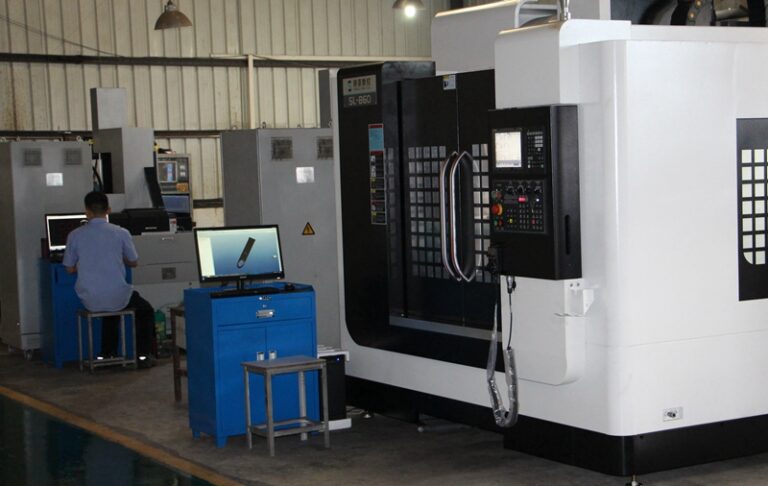
The first layer is the physical world: the machines, robots, conveyors, sensors, and products themselves. This is the factory floor, where material is actually transformed.
The second layer is connectivity: the networks, protocols, and edge devices that collect data from the physical world and transmit it. Sensors measure temperature, vibration, pressure, current, and position. Cameras capture images. Radio-frequency identification tags track parts as they move through the plant.
The third layer is the digital world: cloud platforms and software that store, process, and analyze the data. This is where digital twins live, virtual copies of machines and factories that mirror the physical world in real time. This is where artificial intelligence finds patterns, predicts failures, and optimizes schedules.
The fourth layer is action: the decisions and commands that flow back to the physical world. An algorithm detects that a machine is overheating and slows it down. A scheduler reroutes parts around a bottleneck. A robot adjusts its motion based on sensor feedback. The loop from physical to digital and back again is what makes manufacturing “smart.”
Where Does Industry 4.0 Fit In?
Industry 4.0 is the name for the fourth industrial revolution, and smart manufacturing is its manufacturing face. After mechanization, mass production, and computer automation, the fourth revolution is about connecting everything with digital technology.
The term was coined in Germany in 2011 and has become a global movement. Industry 4.0 is built on a set of technologies: the Industrial Internet of Things, or IIoT, which connects machines and sensors; artificial intelligence, which analyzes data and learns; cloud computing, which provides scalable storage and processing; digital twins, which simulate reality; advanced robotics, which work alongside people; and additive manufacturing, which builds parts from digital files.
Smart manufacturing is what happens when all these technologies come together in a factory. Industry 4.0 is the big-picture concept, and smart manufacturing is its practical application on the factory floor.
What Can a Smart Factory Actually Do?
The capabilities of smart manufacturing sound like science fiction, but they are operating today.
One of the most powerful is predictive maintenance. Instead of fixing machines on a fixed schedule, or worse, after they fail, smart factories monitor machine health continuously. Vibration sensors, temperature readings, and current data feed into algorithms that detect the early signs of wear. The system predicts when a bearing will fail, and maintenance is scheduled before the breakdown, saving millions in downtime.
Another capability is real-time quality control. Cameras and sensors inspect every part as it is made, using machine vision and AI to catch defects that human eyes would miss. The system can adjust process parameters instantly when it detects drift, preventing bad parts before they are made instead of sorting them out later.
Smart manufacturing also enables flexible production. A factory can switch between products quickly, driven by digital changeovers rather than physical tooling changes. In some smart factories, each product carries its own digital instructions, and the machines adapt automatically to make different variants on the same line. Mass customization, making each product unique without slowing down, becomes practical.
Energy efficiency is another benefit. Smart systems monitor energy use machine by machine and optimize schedules to avoid peak rates. Digital twins simulate changes to find energy savings before they are implemented. Some factories report 20 to 30 percent energy savings from these optimizations.
The Digital Twin: A Factory in the Computer
One of the most exciting smart manufacturing technologies is the digital twin. A digital twin is a virtual replica of a physical machine, production line, or entire factory, updated continuously with real data.
The digital twin is not a static 3D model; it is a living simulation. If the real machine’s temperature rises, the twin’s temperature rises. If a sensor reports a worn tool, the twin reflects it. Engineers can run “what if” experiments on the twin, testing changes to the process without risking the real factory.
Digital twins are used for training, before a new production line is built, engineers simulate it in the digital twin and work out the kinks. They are used for optimization, finding the best settings for a machine by testing thousands of combinations virtually. And they are used for diagnosis, when a problem occurs, engineers can replay the twin to understand what happened.
As sensors get cheaper and computing power grows, digital twins are becoming standard equipment in modern factories. They are the flight simulators of manufacturing.
The People Side of Smart Manufacturing
Here is a common misconception: smart manufacturing means factories without people. The reality is more interesting. Smart factories need more skilled people, not fewer, and the work is more engaging.
When machines handle the repetitive tasks and software handles the routine decisions, workers are freed to do what humans do best: solve problems, improve processes, and handle exceptions. The operator of a smart machine becomes a supervisor and analyst, watching dashboards instead of loading parts. Maintenance technicians become data-savvy problem solvers, using diagnostic software instead of trial and error.
The skills in demand are changing. Data literacy, programming basics, systems thinking, and the ability to work with robots and software are increasingly valuable. Companies are investing heavily in training, because the smartest factory in the world is useless without skilled people to run it.
The Road Ahead
Smart manufacturing is not a destination; it is a journey. Most factories are not fully “lights-out” automated; they are adding smart capabilities step by step. A factory might start with sensors on critical machines, add a cloud dashboard, then introduce predictive maintenance, and eventually build digital twins.
The barriers are real: the upfront investment, the complexity of integrating old and new equipment, cybersecurity risks, and the challenge of changing culture and skills. But the direction is clear. Every year, sensors get cheaper, software gets smarter, and the benefits of connectivity grow.
The factories of the future will be more efficient, more flexible, and more sustainable, and they will be run by people who understand both the physical and the digital. Smart manufacturing, and the Industry 4.0 revolution behind it, is not coming; it is already here, and it is changing the way everything is made. The next time you see a perfectly made product at an affordable price, remember that behind it, there may be a factory that is quietly thinking.