Industry 5.0: The Human-Centered Era of Manufacturing
For the past decade, the manufacturing world has been obsessed with Industry 4.0, the digital revolution of connected machines, data, and artificial intelligence. The vision was a fully automated factory where sensors, robots, and software optimize everything. Industry 4.0 has delivered real results, but it also provoked an important question: where do people fit in?
The answer emerging from policymakers, researchers, and industry leaders is Industry 5.0. This is not a new technological revolution in the way Industry 4.0 was; it is a shift in priorities. Industry 5.0 puts humans at the center of manufacturing, complementing technology rather than being replaced by it, and it adds two goals that Industry 4.0 largely ignored: sustainability and resilience. The European Union, which coined the concept, describes Industry 5.0 as human-centric, sustainable, and resilient manufacturing. It is the next chapter of the industrial story, and it is already shaping how factories are designed.
What Exactly Is Industry 5.0?
Industry 5.0 is the label for a vision of manufacturing that balances technological progress with human needs and societal goals. Where Industry 4.0 focused on automation, connectivity, and efficiency, Industry 5.0 adds three pillars.
The first pillar is human-centricity: technology should serve people, not replace them. Workers are not a cost to be minimized or a risk to be automated away; they are the source of creativity, judgment, and adaptability that machines cannot replicate. Industry 5.0 factories are designed around human capabilities, with machines that collaborate with people and augment their skills.
The second pillar is sustainability: manufacturing must respect planetary boundaries. This means energy efficiency, circular materials, reduced waste, and products designed for longevity and recycling. Industry 5.0 recognizes that a factory that destroys its environment is not successful, no matter how efficient it is.
The third pillar is resilience: manufacturing must withstand shocks. The pandemic, geopolitical tensions, and climate events have shown that fragile supply chains are dangerous. Industry 5.0 factories are robust, flexible, and adaptable, able to reconfigure quickly when the world changes.
The Evolution from Industry 4.0 to 5.0
To understand Industry 5.0, it helps to see it as a response to the limitations of Industry 4.0, not a rejection of it.
Industry 4.0 brought incredible capabilities: connected machines, predictive maintenance, digital twins, and AI-driven optimization. It made factories more efficient and more flexible, and it is still spreading. But Industry 4.0 was primarily a technology agenda, and its focus on automation sometimes treated people as an obstacle to be engineered around.
The pandemic was a turning point. Factories with brilliant technology still shut down when their human workers could not travel, when a single supplier failed, or when demand vanished overnight. The experience showed that resilience and human capability matter as much as optimization. It also highlighted that automation alone cannot solve the skills gap; in fact, it makes skilled humans more important.
Industry 5.0 therefore builds on Industry 4.0’s digital foundation while adding the human, environmental, and resilience dimensions. A factory cannot be human-centric, sustainable, and resilient without the data, connectivity, and intelligence of Industry 4.0. The relationship is complementary, not competitive.
Human-Centric Manufacturing: People and Robots as Partners
The most distinctive feature of Industry 5.0 is its vision of human-machine collaboration. This is where the concept of human-centric manufacturing becomes concrete.
In an Industry 5.0 factory, robots and AI do not replace workers; they work alongside them, amplifying their abilities. Collaborative robots handle the repetitive, ergonomically stressful tasks, while humans focus on the tasks that need judgment, dexterity, and creativity. The division of labor is based on complementary strengths, not a race to eliminate labor.
Exoskeletons support workers’ bodies, reducing strain and extending careers. Augmented reality guides workers through complex tasks, transmitting expert knowledge directly into their field of view. AI systems provide recommendations, but humans make the final decisions, especially in unusual situations where judgment matters.
The human-centric approach also changes how factories are designed. Workstations are designed for comfort and safety. Schedules respect human needs. Training is continuous, and workers are involved in designing the processes they use. The factory becomes a place where people grow, not just a place where products are made.
There is a strong business case behind this philosophy. Skilled workers are scarce and valuable; retaining them and using their abilities well is a competitive advantage. Studies consistently show that companies with engaged, empowered workforces are more productive and more innovative. Human-centric manufacturing is not charity; it is strategy.
Sustainability: Manufacturing Within Planetary Limits
The second pillar of Industry 5.0, sustainability, reflects the reality that manufacturing must reduce its environmental impact. Industry is responsible for a large share of global energy use, emissions, and resource consumption, and the pressure to change comes from regulation, customers, investors, and simple physics.
Sustainability in Industry 5.0 means more than adding solar panels. It means redesigning products for circularity, so they can be repaired, upgraded, and recycled instead of discarded. It means using materials efficiently, with manufacturing processes that minimize waste. It means energy efficiency, from machine design to factory scheduling. And it means transparency, with data showing the true environmental footprint of every product.
Digital technology is the enabler. Sensors and analytics reveal energy waste and identify savings. Digital twins simulate the environmental impact of design and process changes before they are implemented. Additive manufacturing produces parts with minimal material waste. AI optimizes logistics to reduce emissions. The data-driven capabilities of Industry 4.0 are being pointed at environmental goals.
Sustainability and efficiency increasingly align. Waste is expensive; energy is expensive; materials are expensive. A factory that reduces waste and energy use is both greener and more profitable. Industry 5.0 reframes sustainability from a compliance burden to a source of competitive advantage.
Resilience: Factories That Bounce Back
The third pillar, resilience, is the lesson learned from the shocks of the 2020s. A resilient factory can absorb disruptions and keep delivering, whether the disruption is a pandemic, a war, a cyberattack, or a climate event.
Resilience has many dimensions. It means diversifying suppliers and reducing dependence on single sources. It means maintaining some buffer capacity and inventory, trading a little efficiency for a lot of security. It means designing production systems that can reconfigure quickly when products or volumes change. And it means investing in cybersecurity, because connected factories are targets.
Human capabilities are central to resilience. Automated systems are excellent at routine operations, but when something unexpected happens, it is humans who improvise, diagnose, and adapt. The factories that weathered the pandemic best were those with skilled, empowered workers who could solve problems on the fly. Resilience is another argument for the human-centric approach.
Digital twins and simulation also support resilience. Companies can stress-test their supply chains virtually, identifying vulnerabilities before they become crises. They can plan responses to different scenarios, from supplier failures to demand spikes. Preparedness becomes a continuous process, not a one-time exercise.
Industry 5.0 in Practice
Industry 5.0 is more than a policy paper; it is already showing up in factories. The EU’s research programs are funding Industry 5.0 projects, like the Bridges 5.0 initiative, which helps small and medium manufacturers adopt human-centric, sustainable, resilient practices.
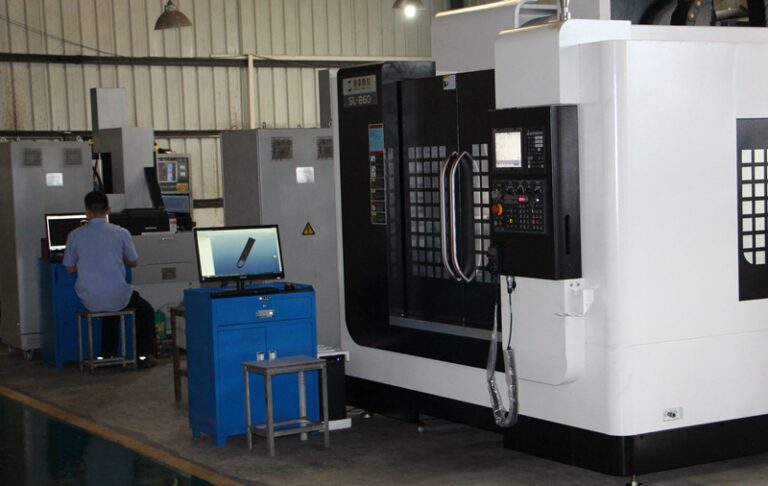
In practice, an Industry 5.0 factory might look like this: collaborative robots work beside skilled operators who use augmented reality glasses for guidance. Exoskeletons reduce physical strain, and biometric sensors watch for fatigue. The factory is powered by renewable energy, recycles its materials, and tracks its environmental footprint in real time. Digital twins simulate scenarios, from demand surges to supplier failures, and the supply chain is diversified and flexible.
Many elements already exist; the difference is the emphasis. Industry 5.0 makes human well-being, sustainability, and resilience explicit goals, not afterthoughts. It gives manufacturers a framework for decisions that balance efficiency with the longer-term interests of people and the planet.
The Challenges Ahead
Industry 5.0 faces real challenges. The first is measurement: how do you quantify human-centricity or resilience? Efficiency has clear metrics; well-being and robustness are harder to measure. New metrics and standards are needed.
The second challenge is investment. Human-centric, sustainable, resilient factories require capital, and the payback is not always immediate. Companies under quarterly pressure may struggle to invest in capabilities whose value shows up over decades.
The third challenge is skills. Human-centric manufacturing requires highly skilled workers, and the education and training systems are not producing them fast enough. The workforce transition is the industry’s greatest bottleneck.
The fourth challenge is scale. Industry 5.0 principles must work not just in flagship factories but across the millions of small and medium manufacturers that make up most of the industry. The EU’s Bridges 5.0 program explicitly targets this, but the diffusion will take time.
The Bottom Line
Industry 5.0 is the next chapter of manufacturing, and it is a welcome correction to the techno-centric narrative of Industry 4.0. It does not abandon digital technology; it puts it in service of people and the planet.
The future of manufacturing is not a choice between humans and machines. It is a partnership: machines handle the repetitive and the dangerous, humans bring creativity and judgment, and the whole system is designed for sustainability and resilience. Industry 5.0, with its human-centric manufacturing vision, is the blueprint for that future.
For manufacturers, the message is practical: start designing with people in mind, measure and reduce environmental impact, and build resilience into the system. The factories that do will be more innovative, more trusted, and more durable. Industry 5.0 is not a distant vision; it is the direction the industry is already moving, and the companies that embrace it will lead the next era of manufacturing.