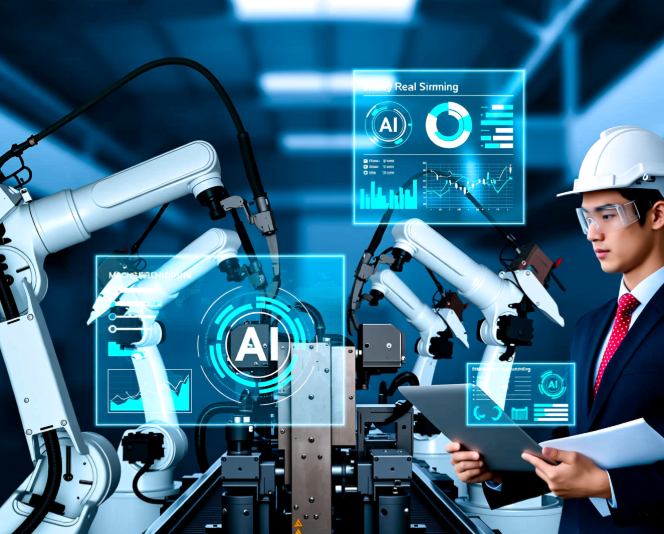
Lights-Out Factories: How Close Are We to Fully Autonomous Plants?
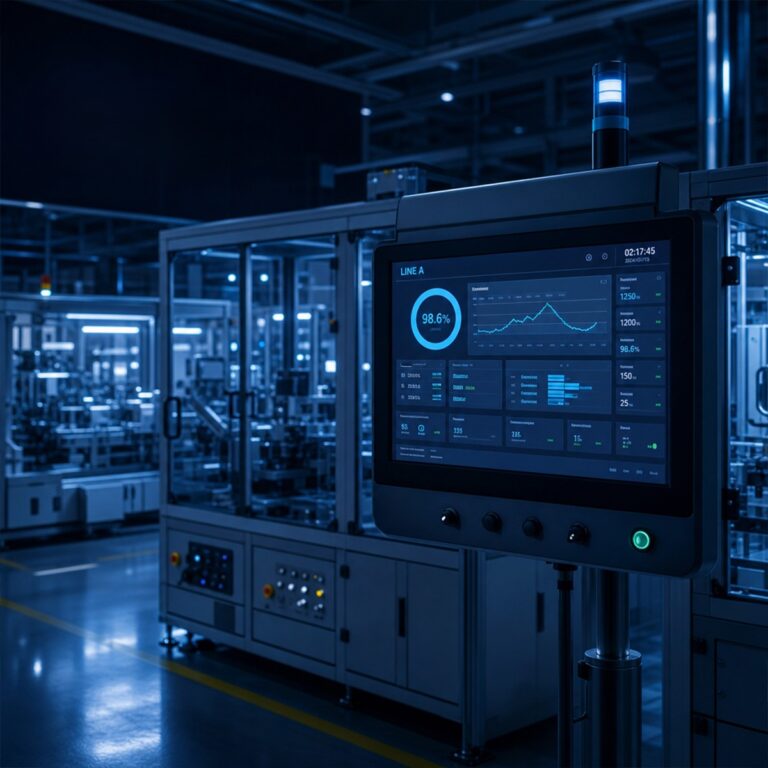
Imagine a factory with the lights off. No people, no noise, no break times. Machines hum in the dark, robots move parts, algorithms schedule production, and by morning, a night’s worth of finished products sits waiting. This is the lights-out factory, sometimes called the autonomous factory or dark factory, and it has been an industrial dream since the first robots arrived.
The idea is not new. The term “lights-out manufacturing” has been around for decades, and the first partially automated plants operated with minimal staffing in the 1980s. But the technology to make truly autonomous factories practical, cheap sensors, powerful AI, reliable robots, and seamless connectivity, has only matured recently. So how close are we really? The honest answer is: closer than most people think, but with important limits that will shape how the autonomous factory arrives.
What Is a Lights-Out Factory?
A lights-out factory is a production facility that can operate without people present, at least for extended periods. The lights are literally off because nobody needs to see.
The concept applies most naturally to machining and manufacturing cells. A CNC machine can run autonomously if parts are loaded and unloaded automatically, if tools are monitored and replaced, and if quality is checked by sensors. Add robots for material handling, software for scheduling, and maintenance systems for diagnostics, and a cell can run through the night.
The first famous lights-out operations were in machining. In the 1980s, FANUC operated robot-run factories in Japan, and other pioneers followed. These facilities proved the concept: for certain processes, automation could run unattended for hours.
What has changed is the scope. Modern technology allows lights-out operation not just for isolated cells but for entire production lines and, increasingly, whole plants. The autonomous factory is moving from a curiosity to a realistic model.
The Building Blocks of Autonomy
The autonomous factory is assembled from technologies that have each matured dramatically in the past decade.
Robotics is the foundation. Modern robots are more reliable, more precise, and easier to program. Collaborative robots work safely alongside people during the day and continue working alone at night. Mobile robots move materials between stations without fixed infrastructure. Machine tending robots load and unload parts around the clock.
Sensors are the senses. Vibration, temperature, current, and vision sensors monitor every machine. They detect tool wear, misalignment, and developing failures. In a lights-out factory, sensors are the night watch, and they are far more vigilant than any human.
Artificial intelligence is the brain. AI schedules production, optimizes sequences, and reroutes work around problems. Predictive maintenance models anticipate failures and trigger maintenance actions. Quality systems inspect every part and adjust processes in real time. AI is what allows the factory to make decisions without people.
Connectivity is the nervous system. Machines, robots, sensors, and software communicate continuously. The Industrial Internet of Things ties the factory together, and digital twins provide a virtual mirror for monitoring and simulation.
And maintenance automation is the hands. Automated tool changers replace worn tools. Robots handle simple repairs. Automated inspection systems verify quality. The factory maintains itself, with human technicians called only for exceptions.
Who Is Already Doing It?
Lights-out manufacturing is not hypothetical; it is operating today, and the examples are instructive.
Machining is the most advanced. Companies around the world run unattended machining cells, loading raw material at the end of the day shift and collecting finished parts in the morning. Some facilities run lights-out for 16 hours a day, with one shift of humans setting up jobs that machines execute unattended.
Electronics manufacturing is highly automated. Circuit board assembly, with its pick-and-place machines and automated inspection, already runs with minimal human intervention. Modern semiconductor fabs are among the most automated factories on Earth, with humans wearing cleanroom suits mainly for maintenance and exception handling.
Warehousing has embraced the model. Fulfillment centers use mobile robots, automated conveyors, and software that coordinates millions of items with few people on the floor. The logistics version of lights-out operation is already mainstream.
Some consumer goods and automotive plants run highly automated lines that operate around the clock with small teams. The fully unmanned factory, running 24/7 with zero people, remains rare, but the partial version, extended unattended operation, is increasingly common.
The Economics: Why It Makes Sense
The economics of lights-out manufacturing are compelling, which is why the model is spreading.
Labor is the obvious saving. A factory running 24 hours with automation replaces multiple shifts of workers. Given the manufacturing skills shortage and rising labor costs, the savings are significant and growing.
Utilization is the bigger opportunity. Machines are expensive assets, and every hour they sit idle is money lost. A lights-out factory can run machines 24/7, nearly doubling or tripling the output from the same capital investment. For a machine shop, this can be the difference between profitability and struggle.
Consistency improves quality. Machines do not get tired, distracted, or inconsistent. Automated quality systems catch defects that humans miss. The result is higher yields and fewer returns.
And speed improves. With machines running through the night, lead times shrink. A customer order received at 5 p.m. can be produced overnight and shipped the next morning. In a world that values speed, this is a competitive weapon.
The Hard Truths: What Lights-Out Cannot Do Yet
For all the progress, the fully autonomous factory faces hard limits that explain why it has not arrived everywhere.
The first limit is the long tail of exceptions. Factories are full of unpredictable events: a part jams, a tool breaks, a sensor fails, a robot drops something. Handling exceptions requires judgment, dexterity, and improvisation, exactly what robots and AI do worst. Lights-out operations are designed to avoid exceptions, but they cannot eliminate them.
The second limit is setup and changeover. Producing a new product usually requires changing tools, fixtures, programs, and parameters. These tasks are complex and often manual. Most lights-out operations run the same jobs repeatedly, with humans handling changeovers during the day.
The third limit is maintenance. While predictive maintenance reduces failures, machines still need human hands for repairs. A skilled technician can diagnose and fix a problem in minutes; an autonomous system may not be able to fix it at all.
The fourth limit is the upfront investment. Building a lights-out factory requires substantial capital for robots, sensors, software, and integration. The payback is real, but not every company can afford the investment.
And there is the human dimension. Even the most automated factory needs engineers, programmers, and technicians, and it needs them more, not less. The autonomous factory does not eliminate skilled work; it concentrates it.
The Path Forward: From Cells to Plants
The autonomous factory will arrive incrementally, not overnight. The pattern is already visible: first individual cells run unattended, then lines, then plants.
The first step is extending unattended operation. Most manufacturers can start with one machine, a robot, and the sensors and software to monitor it. The experience builds confidence and capability.
The second step is expanding the scope. Add more cells, connect them with mobile robots, and let the software coordinate the flow. The factory runs longer unattended as reliability improves.
The third step is handling the exceptions. This is where AI and new robotics will shine. Vision-guided robots that can recover from jams, AI systems that diagnose and route around problems, and modular machines that can reconfigure themselves are all in development. Each advance extends the boundary of what can run unattended.
The fully autonomous plant, with no people on site for days, will arrive first in industries with predictable processes, high automation, and strong economics: precision machining, electronics, pharmaceuticals, and food. It will arrive later in industries with complex assembly, rapid changeovers, and high variability.
The Human Side of the Autonomous Factory
The lights-out factory raises a familiar fear: what happens to workers? The honest answer is that autonomous factories create a different workforce, not no workforce.
The jobs that remain are more skilled: engineers who design the systems, programmers who write the logic, technicians who handle the exceptions, analysts who interpret the data. The factory floor worker becomes a factory orchestrator. This is why the skills shortage is so acute; the autonomous factory needs more people who understand technology, not fewer.
There is also a deeper question about purpose. A factory that runs without people saves money, but it also changes the relationship between work and community. Companies building autonomous factories will need to think carefully about how they train, redeploy, and support their workforces. The most successful will treat the transition as a human project as much as a technological one.
The Bottom Line
How close are we to fully autonomous factories? The answer is that the building blocks are here, the economics are working, and the model is spreading, but the fully lights-out plant remains an aspiration rather than a reality. The future factory will run unattended for long stretches, with machines, sensors, and AI doing the work, and with humans handling the exceptions, the strategy, and the improvement.
The autonomous factory is not a single moment; it is a gradual expansion of the hours and tasks that machines can handle alone. Each year, the boundary moves. The factory of the future is being built cell by cell, night shift by night shift, and the lights are going out, one production line at a time. The future factory is not a place without people; it is a place where people do the thinking, and machines do the rest.