How the Circular Economy Is Reshaping Manufacturing
For two centuries, manufacturing has followed a simple pattern: take raw materials, make products, sell them, and eventually throw them away. Economists call this the linear economy, and it has delivered extraordinary prosperity. But it has also created a mountain of waste, exhausted finite resources, and pushed the planet’s systems to their limits. The circular economy offers a different model: keep materials in use, extract maximum value from them, and regenerate natural systems instead of depleting them.
The circular economy is not a niche environmental movement anymore. It is becoming the operating model of forward-thinking manufacturers, driven by regulation, customer demand, resource scarcity, and genuine economics. This is how circular economy manufacturing is reshaping the industry, from product design to factory operations to the business models that connect them.
What Is the Circular Economy, Really?
The circular economy is an economic system designed to eliminate waste and keep resources in use. It is often summarized by three principles, sometimes called the “3R” framework: reduce, reuse, recycle. More sophisticated versions add repair, refurbish, remanufacture, and redesign.
In a circular system, nothing is “thrown away.” Products are designed to last longer, be repaired easily, be upgraded, and eventually be disassembled so their materials can be recovered. Materials circulate in closed loops: biological materials return to nature safely, and technical materials stay in the industrial system, recycled and remanufactured indefinitely.
The contrast with the linear model is stark. The linear economy treats resources as infinite and waste as an externality. The circular economy treats resources as valuable assets to be managed, and waste as a design flaw. It is a fundamental shift in how manufacturers think about their products, their materials, and their responsibility.
Why Manufacturing Is Moving to Circularity
The drivers of the circular transition are powerful and converging.
Regulation is the first. Governments are banning single-use plastics, requiring recyclability, and making producers responsible for the full lifecycle of their products. The European Union’s Circular Economy Action Plan, extended producer responsibility laws, and right-to-repair legislation are pushing manufacturers to design for circularity whether they want to or not.
Customer demand is the second. Consumers, and even more, business customers, are demanding sustainable products and transparent supply chains. Companies that cannot demonstrate circular credentials lose contracts and market share. B2B buyers increasingly ask suppliers about their environmental footprint, and circularity is part of the answer.
Resource economics is the third. Raw material prices are volatile, supply chains are fragile, and critical minerals are concentrated in a few countries. Circular strategies, like remanufacturing, material recovery, and recycling, reduce dependence on virgin materials and protect manufacturers from price shocks.
And the business case is strengthening. Circular products are often more profitable over their lifecycle, because they retain value instead of being discarded. A manufacturer that remanufactures used products captures revenue that a linear competitor writes off.
Designing for Circularity
The circular economy begins at the design stage, because 80 percent of a product’s environmental impact is determined by its design. Circular design is a set of principles that make products fit for a circular system.
The first principle is durability. Products are designed to last longer, using quality materials and robust construction. Longer product life means fewer resources consumed and less waste generated.
The second is repairability. Products are designed so components can be accessed, replaced, and repaired. Standardized parts, modular construction, and accessible fasteners make repair practical. The right-to-repair movement is pushing manufacturers to provide spare parts, tools, and documentation.
The third is upgradability. Products are designed to accept new components, so they can be improved rather than replaced. A laptop with replaceable memory, a phone with an upgradable camera, a machine tool with swappable modules, all extend useful life.
The fourth is disassembly. Products are designed to come apart at end of life, so materials can be separated and recovered. Snap-fit joints instead of glued ones, labels on every material, and standardized fasteners all ease disassembly.
The fifth is recyclability. Materials are chosen for their recyclability, and hazardous or hard-to-recycle substances are avoided. A product designed for circularity is not a collection of parts; it is a bank of future materials.
Circular Manufacturing Operations
Circularity also transforms factory operations. The factory itself becomes a system that minimizes waste, recovers materials, and uses energy efficiently.
Zero-waste manufacturing is the goal. Scrap from machining is collected and recycled. Defective parts are reworked or remanufactured instead of discarded. Packaging is eliminated, reused, or made recyclable. Water is recycled. Waste heat is recovered. The factory becomes a closed loop.
Additive manufacturing supports circularity in surprising ways. 3D printing produces minimal material waste, unlike subtractive machining. It enables on-demand production, reducing the inventory of products that become obsolete. And it enables repair: a worn component can be restored with printed material instead of being replaced.
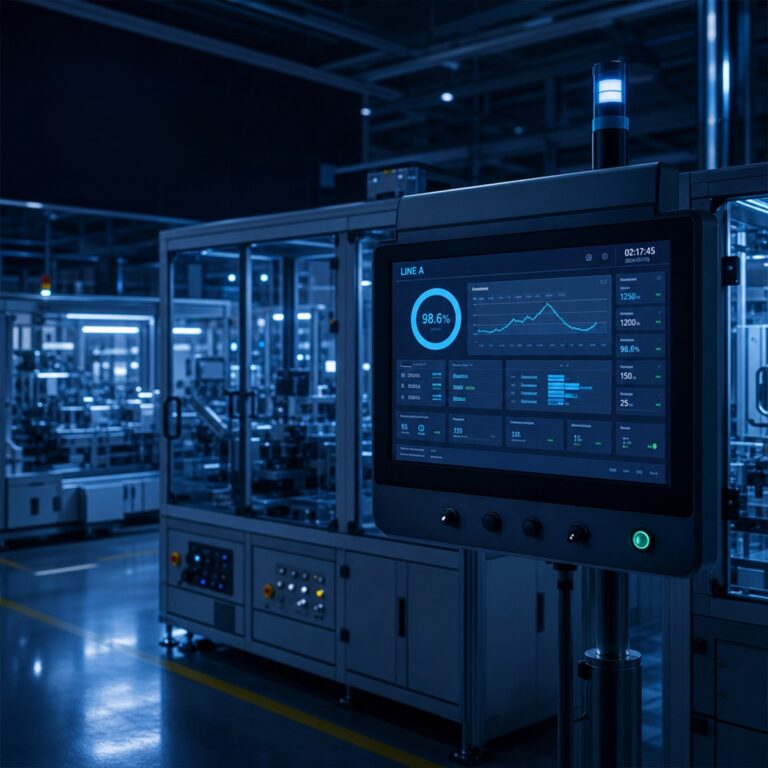
Digital twins help optimize resource use. A digital twin of a factory can model material flows, identify waste, and simulate improvements before implementation. Sensors and analytics reveal where energy and materials are being lost. Data is the foundation of the circular factory.
Manufacturing execution systems are being extended to track products and materials through their lifecycle, creating the data needed for take-back programs, remanufacturing, and material recovery. The factory’s information system becomes the circular economy’s nervous system.
Remanufacturing: The Hidden Giant
One of the most powerful circular strategies is remanufacturing: restoring used products to like-new condition. Remanufacturing is not recycling; it preserves the value embedded in a product, including its manufacturing, assembly, and materials.
The economics are compelling. A remanufactured product typically costs 40 to 60 percent less than a new one, uses 80 percent less energy, and requires far fewer raw materials. For products like automotive components, industrial machinery, and electronics, remanufacturing is a mature, profitable industry.
Manufacturers are embracing remanufacturing as a business model. Instead of selling a product once, they sell it, recover it, remanufacture it, and sell it again. This “product as a service” model creates recurring revenue and deepens customer relationships. Caterpillar, for example, has built a global remanufacturing business that recovers value from millions of components.
Remanufacturing also reshapes the supply chain. Manufacturers need reverse logistics to collect used products, inspection and cleaning facilities, remanufacturing lines, and channels to resell the restored products. The factory of the future will have both a forward production line and a reverse remanufacturing line.
Sustainable Production in Practice
Sustainable production, the manufacturing side of the circular economy, is becoming a measurable discipline. Companies report on energy use, emissions, water, waste, and circularity metrics, and investors and customers increasingly use these metrics in decisions.
Renewable energy is the foundation. Factories are installing solar panels, purchasing renewable power, and electrifying processes. Some advanced facilities operate as net-zero plants, producing as much energy as they consume.
Material efficiency is the second pillar. Lightweighting reduces material use per product. Near-net-shape processes, like forging and additive manufacturing, minimize scrap. Closed-loop recycling keeps production waste in the system.
And the circular economy connects manufacturing to the wider economy. A manufacturer’s products, and their end-of-life fate, are part of its environmental responsibility. The most advanced companies design take-back programs, collect their used products, and feed the materials back into production.
The Challenges
The circular transition is not easy. The first challenge is economics: circular products and processes often cost more upfront, and the benefits arrive over the lifecycle. Financial systems that reward quarterly results struggle to value long-term circularity.
The second is infrastructure. Recycling, remanufacturing, and reverse logistics require systems that do not exist everywhere. Building them takes investment and coordination across the value chain.
The third is design complexity. Circular design is harder than linear design, requiring materials expertise, lifecycle thinking, and collaboration across functions. Many companies lack the skills.
The fourth is consumer behavior. Circular systems depend on customers returning products, repairing them, and buying remanufactured goods. Culture changes slowly, and manufacturers must educate and incentivize their customers.
The Bottom Line
The circular economy is not a distant utopia; it is an operating model being built right now, factory by factory, product by product. Circular economy manufacturing is driven by hard realities, resource scarcity, regulation, and customer demand, and it is being enabled by digital technology, new materials, and creative business models.
The manufacturers that embrace circularity will gain resilience, reduce costs, and build trust. They will turn waste into revenue, and they will be less vulnerable to supply shocks and price volatility. The ones that ignore it will face rising costs, regulation, and lost customers.
The linear economy took two centuries to build, and it will not be replaced overnight. But the direction is clear. The factory of the future is not a one-way machine that consumes resources and produces waste; it is a circular system that keeps materials in motion, extracts maximum value, and regenerates the resources it uses. That is not just a better manufacturing model; it is the only sustainable one, and it is already reshaping the industry.