The Future of AI in Manufacturing: A 2025-2030 Outlook
Artificial intelligence has been called the new electricity, and if that comparison is fair, manufacturing is one of the first industries to feel the current. AI is no longer a buzzword in factory boardrooms; it is embedded in machine controls, quality systems, maintenance schedules, and supply chain software. The question is no longer whether AI will transform manufacturing, but how far and how fast the transformation will go.
The outlook for AI in manufacturing through 2030 is striking. Industry analysts project that spending on industrial AI will grow at a compound annual rate of over 40 percent, making it one of the fastest-growing technology categories in the world. The future of AI in manufacturing is not a single technology; it is a wave of applications, each compounding on the others, and it will reshape every layer of the factory. Here is what the next five years look like.
Where AI Is Already Working
To forecast the future, start with the present. AI is already delivering measurable results in manufacturing, and the applications form a pattern.
Quality inspection is the most mature application. AI vision systems inspect parts at production speed, detecting defects with accuracy that exceeds human inspectors. The technology is proven, the return on investment is fast, and adoption is spreading from flagship factories to small shops.
Predictive maintenance is close behind. AI models analyze sensor data to predict machine failures before they happen, cutting downtime by 30 percent or more. The models improve with every data point, and they are becoming standard equipment on new machines.
Demand forecasting and supply chain optimization are also mature. AI systems process enormous datasets, incorporating market signals, weather, and geopolitical events, to predict demand and optimize inventory. In a volatile world, these capabilities are increasingly essential.
Generative design is moving from pilot to production. AI explores thousands of design options, producing parts that are lighter and stronger, and additive manufacturing turns the designs into reality. The aerospace and medical industries are leading, and the technology is spreading.
These applications share a common pattern: AI takes a task that was slow, inconsistent, or impossible for humans, and does it faster and better. That pattern will define the next five years.
The Next Wave: Autonomous Operations
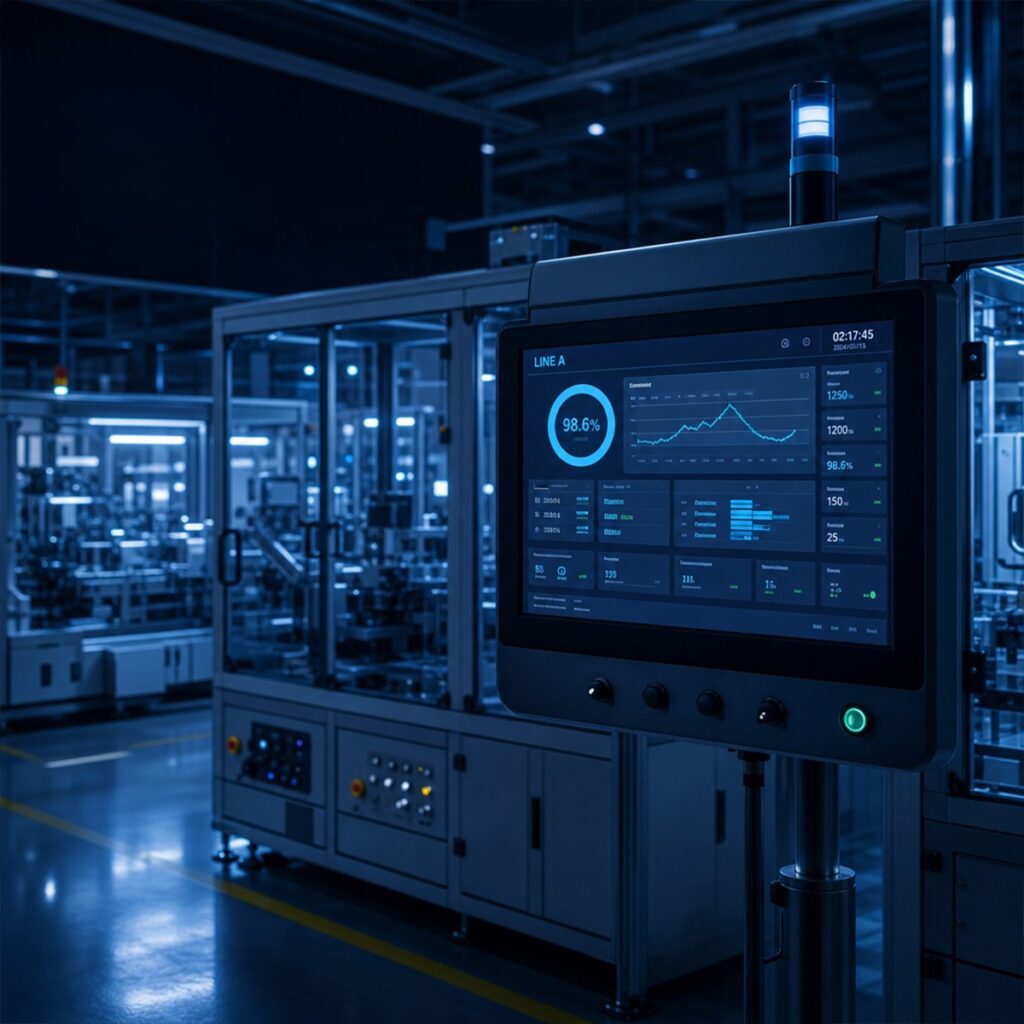
The most significant development in the 2025-2030 window will be the move from AI-assisted to AI-autonomous operations. The distinction matters: today, most AI systems recommend; tomorrow, more systems will act.
Autonomous production scheduling is arriving. AI systems will manage the factory’s schedule in real time, rerouting work around breakdowns, prioritizing urgent orders, and optimizing energy use, without waiting for a human planner. The factory becomes self-organizing.
Autonomous quality control will close the loop. Instead of inspecting parts and flagging defects, AI systems will detect drift in the process and adjust parameters automatically, preventing defects from forming in the first place. The quality system becomes a process controller, not a gate.
Autonomous maintenance is emerging. AI will not just predict failures; it will order the parts, schedule the repair, and coordinate the technician or robot, executing the maintenance workflow with minimal human involvement.
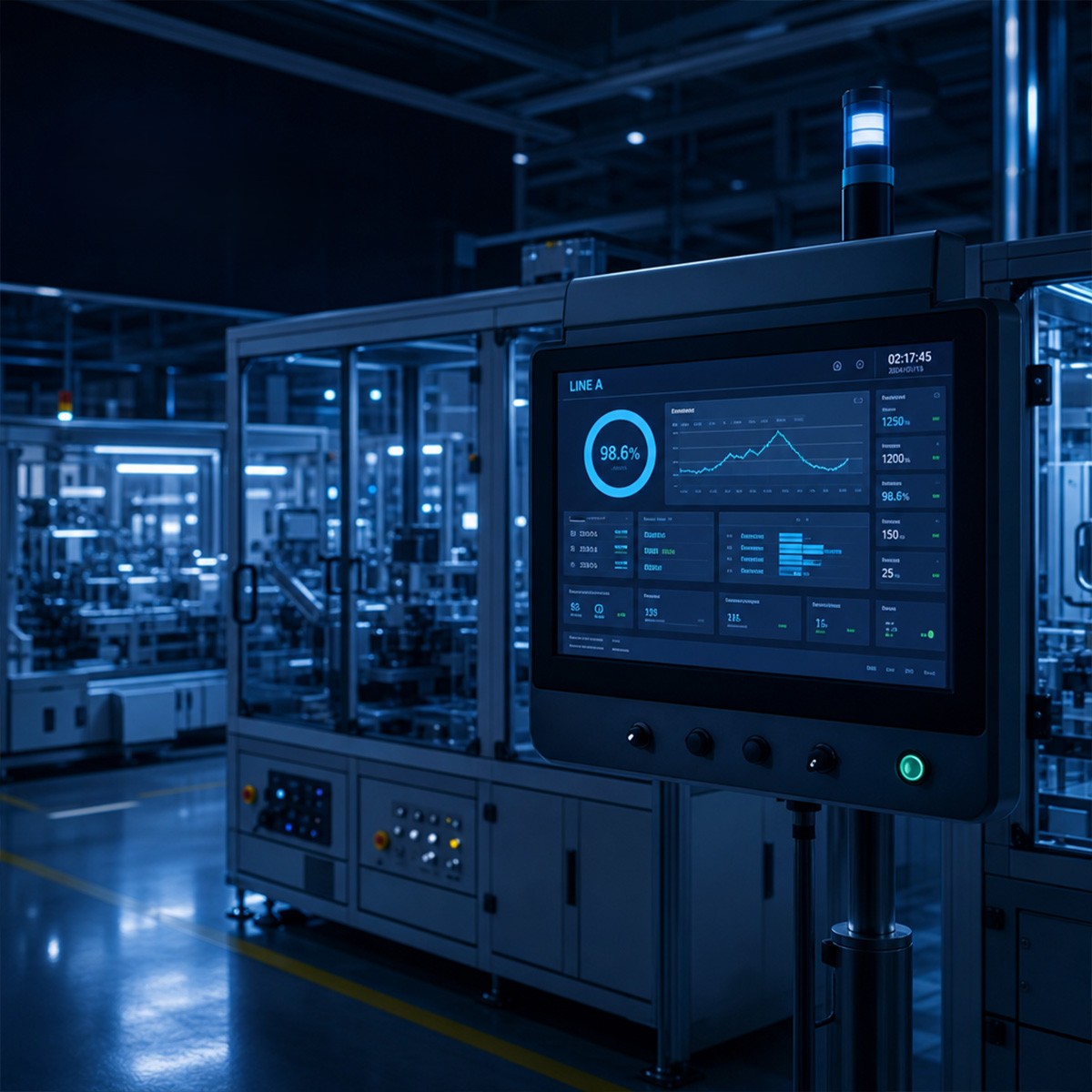
The ultimate expression is the lights-out factory, where production runs unattended. The technology exists today for individual cells; the next five years will bring whole factories closer to that reality, with AI orchestrating machines, robots, logistics, and maintenance through the night.
The Rise of the AI Engineer
One of the most important shifts will be in the workforce. The future of AI in manufacturing is not fewer people; it is different people, with new skills.
The AI engineer, who understands both machine learning and manufacturing, will be one of the most valuable roles in industry. These professionals translate factory problems into AI solutions, and they are scarce. Companies are already competing fiercely for this talent, and the shortage will shape the pace of adoption.
Equally important is the upskilling of the existing workforce. Operators will become supervisors of AI systems, interpreting recommendations and handling exceptions. Maintenance technicians will use AI diagnostics as standard tools. Quality inspectors will train AI models instead of inspecting parts manually. The factory floor will be a place of continuous learning.
The democratization of AI tools will accelerate this shift. Low-code and no-code platforms let engineers with no formal data science training build useful AI models. AI assistants embedded in software guide users through complex tasks. The technology is becoming accessible, and the skills barrier is falling.
AI and the Human-Machine Partnership
The narrative of AI replacing humans is giving way to a more accurate story: AI and humans as partners. Each side has strengths that complement the other.
AI excels at processing enormous data volumes, detecting patterns, and executing routine tasks consistently. Humans excel at judgment, creativity, ethics, and handling the unexpected. The best manufacturing organizations will be those that combine AI’s analytical power with human wisdom.
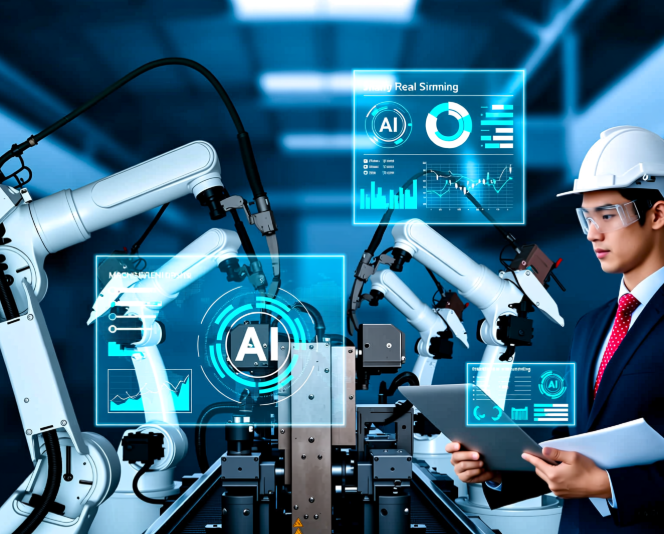
This partnership will be visible everywhere. Designers will direct generative AI, choosing among the designs it proposes. Engineers will trust AI predictions but verify critical decisions. Operators will rely on AI recommendations while applying their experience to unusual situations. The human role shifts from doing the work to directing the intelligence that does the work.
The human-centric approach also addresses the trust problem. AI systems that explain their reasoning, and humans who understand their limits, build the confidence needed for adoption. The factories that get this right will move faster than those that either fear AI or trust it blindly.
The Data Foundation
All of this depends on data. AI is hungry for data, and the quality of its output is bounded by the quality of its input.
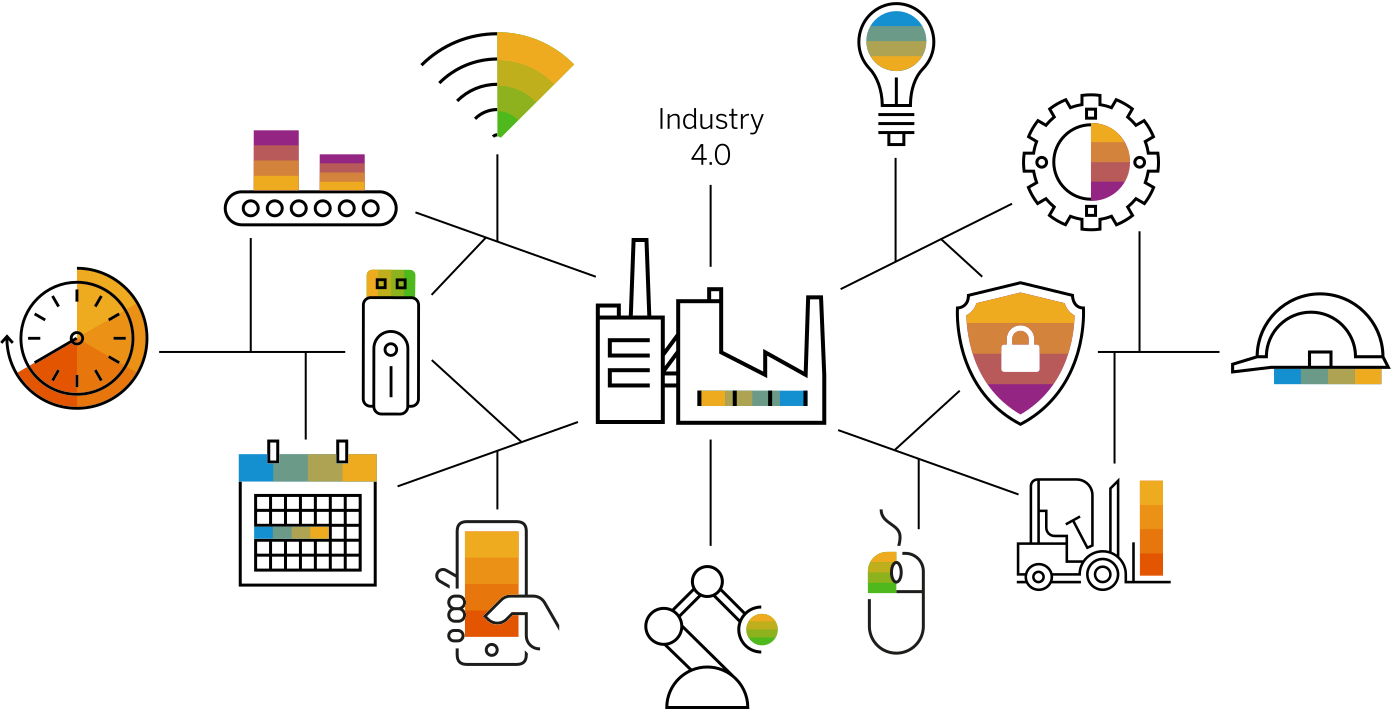
The next five years will see dramatic growth in factory instrumentation. Sensors will become cheaper, more capable, and more ubiquitous. Machines will ship with data interfaces as standard. The Industrial Internet of Things will expand from pilot deployments to comprehensive coverage.
Data will also flow across the value chain. Suppliers, factories, logistics, and customers will share data through secure networks, creating the “data thread” that connects the entire lifecycle of a product. AI systems trained on this richer data will make better decisions, and the whole system will improve.
Data governance will become a strategic priority. Companies will need clear policies for data ownership, privacy, security, and sharing. The organizations that manage data well will have an enduring advantage over those that treat it as an afterthought.
AI Manufacturing Trends to Watch
Several specific AI manufacturing trends will define the 2025-2030 period.
Generative AI, the technology behind chatbots and image generators, is entering manufacturing. It will write work instructions, generate code for machines, summarize maintenance logs, and assist engineers with documentation. The technology will become the interface between humans and complex systems.
Foundation models trained on industrial data will provide general intelligence that can be adapted to specific factories. Instead of building each AI system from scratch, companies will fine-tune powerful base models for their machines and processes. This will dramatically reduce the cost and time of AI adoption.
Edge AI will bring intelligence to the machine itself, processing data locally for instant response and working even when the network is down. The combination of edge and cloud will create systems that are both fast and wise.
Physics-informed AI will combine machine learning with engineering physics, producing models that respect the laws of nature. These models will be more reliable, more generalizable, and more trustworthy than purely data-driven models, and they will accelerate adoption in safety-critical applications.
The Challenges Ahead
The future is bright, but the path has obstacles. Cybersecurity is the most urgent: connected, AI-driven factories are attractive targets, and a successful attack can stop production or compromise safety. AI security will be as important as AI capability.
Data quality remains a persistent challenge. Many factories still struggle with incomplete, inconsistent, or inaccessible data, and AI systems are only as good as their training data. The data foundation must be built deliberately.
Integration is hard. Most factories run a patchwork of legacy equipment and modern systems, and connecting them all is a slow, expensive process. The transition to AI-enabled operations will take years, not quarters.
And there is the human challenge: skills, trust, and organizational change. Technology is the easy part; culture is hard. Companies that invest in people, not just algorithms, will realize the most value.
The Bottom Line
The future of AI in manufacturing is one of the most exciting stories in industry. The AI manufacturing trends of the next five years, autonomous operations, generative AI, edge intelligence, and the rise of the AI engineer, will transform how products are designed, made, and delivered.
The destination is a factory that is more efficient, more flexible, more resilient, and more sustainable, run by a partnership between human judgment and machine intelligence. The path is not without challenges, but the direction is unmistakable. AI is becoming the operating system of manufacturing, and the factories that embrace it will define the competitive landscape of 2030. The current is flowing, and manufacturing is plugged in.