IMTS 2025/2026 Highlights: What the Biggest Manufacturing Show Tells Us
Every two years, the manufacturing world gathers in Chicago for the International Manufacturing Technology Show, better known as IMTS. It is the largest manufacturing technology exhibition in the Western Hemisphere, a nine-day spectacle where machine tools rumble, robots dance, and hundreds of thousands of square feet of floor space fill with the latest innovations. For anyone who wants to know where manufacturing is headed, IMTS is the crystal ball.
The 2025 edition, and the momentum building toward 2026, offered a clear picture of the industry’s direction. The headlines were automation, artificial intelligence, and the growing role of software, alongside the always-impressive parade of precision machine tools. Let’s walk through the biggest IMTS highlights and what they tell us about the future of manufacturing.
The Scale of the Show
To understand the significance of IMTS, you need to appreciate its scale. The show fills multiple halls of Chicago’s McCormick Place, with thousands of exhibitors and over a hundred thousand attendees from around the world. Every major machine tool builder is there: DMG MORI, Mazak, Haas, Okuma, Fanuc, Siemens, and hundreds of smaller specialists.
The attendees are just as diverse. Machine shop owners come to buy equipment. Engineers come to evaluate technology. Students come to see the future. Automakers, aerospace manufacturers, medical device companies, and job shops all walk the same aisles. IMTS is where the industry shows off, compares notes, and makes deals, and its trends are a reliable mirror of manufacturing reality.
The show also includes educational components, like the Smartforce Student Summit, which introduces young people to manufacturing careers, and conference tracks covering technical topics from additive manufacturing to workforce development. IMTS is as much about the people and the ideas as the machines.
Automation Everywhere
If one word dominated the recent IMTS editions, it was automation. Machine tools were increasingly wrapped in robotic systems: robot tenders loading and unloading parts, automated pallet systems, and cells that run unattended for hours.
The trend reflects a fundamental shift in how machine shops operate. Labor shortages have made unattended production essential, and the economics of automation have improved dramatically. A shop can now buy a CNC machine with an integrated robot, a vision system, and a pallet rack, and run it through the night, producing parts while the lights are off.
The automation on display was not limited to large systems. Compact, affordable automation aimed at small shops was everywhere, from tabletop robots that fit beside a single machine to software that programs robots by dragging and dropping. The democratization of automation, making it accessible to shops with five employees, was one of the clearest IMTS highlights.
Collaborative robots, or cobots, were also prominent. They work safely alongside people, without fences, handling machine tending, inspection, and assembly. The message from the show floor was unmistakable: automation is no longer a luxury for large corporations; it is a survival tool for every manufacturer.
AI Takes Center Stage
Artificial intelligence was the other dominant theme. It seemed every exhibitor had an AI story, and for good reason: AI is delivering real results in manufacturing.
The most visible AI applications were in quality inspection. Camera systems with machine learning now inspect parts at production speed, catching defects that human inspectors miss. Several exhibitors demonstrated systems that learned to identify defects from just a few examples, replacing days of programming with minutes of training.
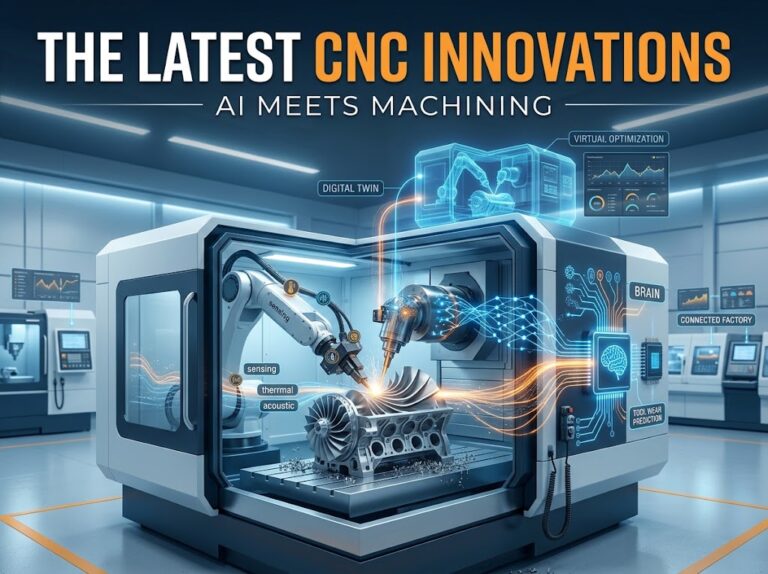
AI was also embedded in machine controls. Predictive maintenance systems analyze sensor data to forecast tool wear and machine failures. Adaptive control systems adjust cutting parameters in real time based on what the sensors report. Generative design software creates optimized parts that are then machined or printed. The machine tool is becoming an intelligent system, not just a mechanical one.
Software platforms were a major theme too. Every machine builder now offers a digital platform that connects machines, monitors them, and analyzes their data. The show made clear that the competitive battleground has shifted from hardware to software, from the machine itself to the intelligence around it.
Additive Manufacturing Grows Up
Additive manufacturing, or 3D printing, has been a fixture at IMTS for years, but its role has changed. Early shows featured prototypes and promises; recent editions feature production systems and business cases.
Metal 3D printing was the star. Powder bed fusion systems from companies like EOS, SLM Solutions, and GE Additive displayed production parts for aerospace and medical applications. The message was that metal additive manufacturing is now a production technology, not a prototyping curiosity. The machines are faster, more reliable, and more affordable, and the software for design and simulation has matured.
Hybrid machines, which combine additive and subtractive processes in one system, drew crowds. These machines can print a near-net-shape part and machine it to final tolerance in a single setup, opening new possibilities for repair and complex geometry.
The additive trend at IMTS reflected the broader industry shift: 3D printing is moving into the factory, complementing rather than replacing conventional processes. The focus is on production economics, quality assurance, and integration with existing workflows.
Precision Manufacturing Innovations
Beneath the digital dazzle, IMTS remained a show about machines that cut metal, and the precision manufacturing innovations were impressive.
Machine tool builders showcased advances in accuracy, speed, and rigidity. Five-axis machining centers handled complex aerospace parts in a single setup. Multitasking machines turned, milled, and ground parts without moving them between machines. Automation, in-process probing, and thermal compensation pushed tolerances into the micron range.
Tooling companies displayed new cutting materials, coatings, and geometries that extend tool life and boost productivity. Coolant and chip management systems improved sustainability. Workholding innovations reduced setup times. The message was that the fundamentals, cutting metal accurately and efficiently, are still improving at a remarkable pace.
Manufacturing analytics also advanced. Shop floor software now provides real-time visibility into machine utilization, job progress, and profitability. The data that used to live in operators’ heads is now on dashboards, and the best shops are using it to make decisions daily.
Sustainability and the Workforce
Two quieter themes ran through the recent shows: sustainability and the workforce.
Sustainability appeared in machine energy efficiency, coolant management, recycling systems, and the growing use of additive manufacturing to reduce material waste. Exhibitors highlighted energy-monitoring software that helps shops cut consumption, and machine builders competed on “green” credentials. The industry is recognizing that efficiency and sustainability are the same thing: less waste, less energy, and lower costs.
The workforce theme was urgent. With skilled workers retiring and too few young people entering the trades, the industry faces a talent crisis. IMTS responded with programs to attract students, and exhibitors emphasized ease of use: software that is intuitive, robots that are easy to program, and machines that run unattended. The message was that technology is part of the workforce solution, helping fewer, less-experienced workers achieve more.
What IMTS Tells Us About the Future
Looking at the IMTS highlights across the recent editions, a coherent picture of manufacturing’s future emerges.
Manufacturing is becoming more automated, with machines and robots working unattended around the clock. It is becoming more intelligent, with AI embedded in inspection, maintenance, and process control. It is becoming more software-driven, with digital platforms connecting everything. It is becoming more flexible, with additive and hybrid processes complementing conventional machining. And it is becoming more sustainable, with efficiency driving both profit and environmental responsibility.
The manufacturing exhibition trends also reveal what has not changed: the importance of skilled people. The machines are getting smarter, but they still need engineers, programmers, and technicians who understand them. The workforce challenge is the industry’s greatest risk, and its greatest opportunity.
The Bottom Line
IMTS is more than a trade show; it is the state of manufacturing, displayed in steel and silicon. The recent editions showed an industry embracing automation and AI, integrating additive manufacturing, pushing precision further, and facing its sustainability and workforce challenges head-on.
For manufacturers, the takeaways are practical. Automation is affordable enough for small shops. AI is delivering measurable returns in quality and uptime. Additive manufacturing is ready for production applications. And the companies that start adopting these technologies now will build experience and advantage before the next show.
The countdown to the next IMTS is already running, and the pace of change is accelerating. If the last editions are any guide, the next show will feature machines that are faster, software that is smarter, and a manufacturing industry that is more connected, more efficient, and more sustainable than ever. Chicago in even-numbered years is where the future of manufacturing shows up, and the future looks bright.