
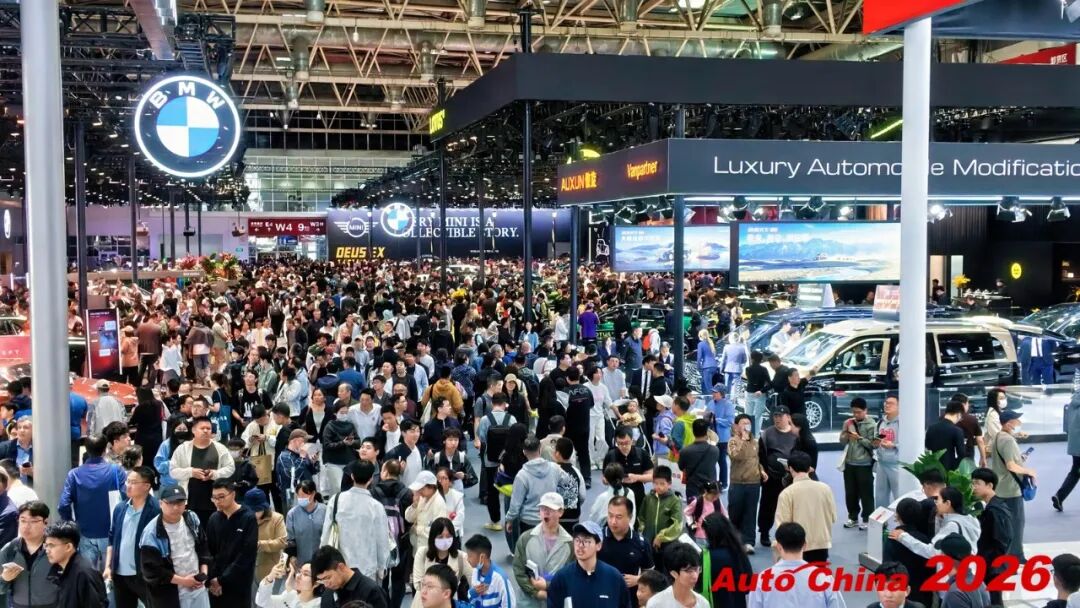
The 2026 Beijing Auto Show: How AI, Electrification, and Chinese Innovation Are Reshaping the Global Automotive Industry
The 2026 Beijing International Automotive Exhibition was not merely a traditional auto show. It marked a historic turning point for the global automotive industry. For decades, car shows were centered around horsepower, engine displacement, luxury interiors, and mechanical engineering. In Beijing this year, however, the spotlight shifted decisively toward artificial intelligence, autonomous driving, robotics, electrification, and integrated mobility ecosystems.
What visitors witnessed was not simply the future of cars — it was the emergence of the “intelligent mobility era.”
The Beijing Auto Show has always been important because China is the world’s largest automotive market. Yet in 2026, the event demonstrated something much bigger: China is no longer just the world’s largest consumer of automobiles; it is becoming one of the world’s most influential automotive technology leaders.
From Chinese EV giants to German luxury brands, from flying cars to humanoid robots, the exhibition revealed that the automotive industry is undergoing its most disruptive transformation since the invention of the internal combustion engine.
A New Era: Cars Are Becoming AI-Powered Intelligent Platforms
The most important theme of the 2026 Beijing Auto Show was clear: the car is evolving into an AI-powered intelligent terminal.
In previous years, so-called “smart cars” mostly relied on voice commands and touchscreen interfaces. Drivers could ask the vehicle to adjust air conditioning or navigate to a destination. In 2026, that concept has evolved dramatically.
Major companies showcased AI systems capable of understanding context, learning driver behavior, making proactive decisions, and interacting naturally with passengers.
Chinese technology firms and automakers demonstrated advanced AI cockpit systems based on large language models. These systems are no longer simple assistants — they function more like intelligent digital companions.
Among the key participants were:
- Xpeng Motors
- BYD
- NIO
- Li Auto
- Huawei Intelligent Automotive Solution
- Zeekr
Many vehicles at the show featured AI systems capable of:
- Predicting user preferences
- Automatically planning routes based on traffic and habits
- Coordinating with smart homes
- Monitoring driver fatigue and health conditions
- Delivering highly personalized in-car experiences
The industry is moving beyond “smart features” toward genuine automotive intelligence.
In many ways, the modern car is beginning to resemble a smartphone on wheels — except vastly more complex and far more integrated into daily life.
Autonomous Driving Finally Enters the Real World
For years, autonomous driving technology has been overhyped. Companies repeatedly promised self-driving cars “next year,” yet real-world deployment remained limited.
The 2026 Beijing Auto Show felt different.
This year marked the beginning of serious Level 3 autonomous driving commercialization.
Unlike Level 2 systems, which still require constant driver supervision, Level 3 allows the vehicle to handle certain driving conditions independently. This transition is extremely significant because it changes the relationship between humans and vehicles.
Several companies unveiled production-ready or near-production Level 3 systems.
Chinese autonomous driving suppliers emerged as major industry leaders, including:
What surprised many observers was the growing dependence of international automakers on Chinese autonomous driving technology.
German brands such as:
have increasingly partnered with Chinese suppliers for intelligent driving systems, AI software, batteries, and digital cockpit technologies.
This reflects a profound shift in the industry. China is no longer only manufacturing vehicles efficiently; it is becoming a critical innovation hub for automotive software, AI algorithms, sensors, and intelligent mobility ecosystems.
The competitive advantage of future automakers may depend less on engine engineering and more on data processing, machine learning, and software integration.
Flying Cars Are Becoming a Real Business
One of the most fascinating sections of the Beijing Auto Show involved low-altitude transportation and flying vehicles.
For years, flying cars existed mostly as futuristic concepts. In 2026, companies began discussing them in practical business terms.
Major exhibitors included:
Instead of simply displaying prototypes, companies focused on topics such as:
- Airworthiness certification
- Urban air mobility infrastructure
- Operating costs
- Commercial applications
- Pilot training
- Regulatory frameworks
This represented a major psychological shift.
The industry conversation has evolved from:
“Can flying cars work?”
to:
“How can flying mobility become commercially viable?”
China’s rapid development of the “low-altitude economy” has accelerated interest in aerial transportation. Government support, battery advancements, and AI-assisted flight systems are helping move these technologies closer to commercial reality.
Although large-scale adoption may still take years, the transition from concept to commercialization has clearly begun.
Humanoid Robots and Automakers Are Converging
Another remarkable trend at the show was the increasing overlap between robotics and automotive technology.
Several automakers introduced humanoid robots alongside their vehicles.
For example:
- Xpeng Motors showcased its IRON humanoid robot
- GAC Group introduced robotic mobility concepts
- Multiple suppliers displayed robotic perception and motion-control systems
This convergence is not accidental.
Autonomous vehicles and humanoid robots share many core technologies:
- Computer vision
- AI decision-making
- Environmental perception
- Motion control
- Sensor fusion
- Real-time computing
In essence, future automakers may evolve into broader “physical AI” companies.
A company capable of building autonomous driving systems may also possess the technological foundation to develop intelligent robots, drones, logistics systems, and smart infrastructure.
The automotive industry is gradually merging with the robotics industry.
Chinese EV Brands Continue Global Expansion
Another major highlight of the Beijing Auto Show was the growing international influence of Chinese electric vehicle brands.
Just a decade ago, many foreign consumers viewed Chinese vehicles as inexpensive alternatives with limited technological sophistication. That perception is changing rapidly.
Chinese automakers now lead in several key areas:
- Battery technology
- Charging speed
- Manufacturing scale
- Software integration
- Cost efficiency
- AI-enabled vehicle ecosystems
Companies such as:
attracted enormous attention from international dealers, investors, and media.
Many overseas visitors were particularly impressed by China’s speed of innovation. Chinese automakers now iterate software and hardware much faster than many traditional manufacturers.
In some cases, vehicle updates resemble consumer electronics cycles more than conventional automotive development.
This rapid innovation culture may become one of China’s greatest long-term advantages in the global automotive race.
Traditional Automakers Are Under Pressure to Reinvent Themselves
The Beijing Auto Show also highlighted the enormous pressure facing traditional automotive giants.
Legacy automakers built their reputations on mechanical engineering excellence, manufacturing quality, and brand heritage. However, the industry’s center of gravity is shifting toward software and AI.
Today’s consumers increasingly care about:
- Smart cockpit experience
- Autonomous driving capability
- Connectivity
- Software updates
- Digital ecosystems
rather than traditional performance metrics alone.
As a result, many established automakers are aggressively restructuring their business models.
Several trends were visible:
- Partnerships with Chinese technology suppliers
- Increased investment in software-defined vehicles
- Transition toward centralized computing architectures
- Greater reliance on AI-driven development
- Integration of cloud ecosystems into vehicle platforms
The automotive industry is beginning to resemble the smartphone industry in terms of software importance and ecosystem competition.
The Future of the Automotive Industry: Trends for the Next 10 Years
The 2026 Beijing Auto Show provided a powerful preview of how the automotive industry may evolve over the next decade.
Several major trends are likely to dominate the 2030s.
1. Software Will Become More Important Than Hardware
Cars will increasingly function as software platforms.
Future competition will focus on:
- AI capabilities
- Operating systems
- Data ecosystems
- User experience
- Cloud integration
Mechanical engineering will remain important, but software differentiation will become the primary battlefield.
2. Autonomous Driving Will Expand Gradually
Fully autonomous driving may still face regulatory and technical challenges, but advanced driver assistance systems will become mainstream.
Highway autonomy, urban navigation, automated parking, and AI-assisted driving will become standard features in many markets.
The companies with the strongest data ecosystems and AI training capabilities will gain a major advantage.
3. Electric Vehicles Will Dominate New Car Sales
The transition from internal combustion engines to electric powertrains is accelerating globally.
Battery costs continue to decline while charging infrastructure improves rapidly.
Within the next decade, EVs may become the dominant choice in many regions, particularly in China and Europe.
4. The Automotive Industry Will Merge With Robotics and AI
Cars, robots, drones, and smart infrastructure will increasingly share common technological foundations.
Future mobility companies may operate across multiple sectors:
- Autonomous vehicles
- Delivery robotics
- Urban air mobility
- Smart city systems
- Industrial AI
The boundaries between industries will continue to blur.
5. China Will Remain a Central Force in Automotive Innovation
China’s scale, supply chain depth, manufacturing efficiency, and AI adoption speed position it as one of the most influential automotive markets in the world.
While geopolitical competition will continue, China’s role in battery technology, intelligent driving, and EV manufacturing is likely to remain extremely significant.
Conclusion
The 2026 Beijing Auto Show was not simply another industry exhibition. It represented a historical inflection point for global mobility.
The event demonstrated that the future automobile is no longer defined primarily by engines, transmissions, or mechanical systems. Instead, the industry is evolving toward intelligent, connected, AI-driven mobility ecosystems.
Cars are becoming smarter, more autonomous, more connected, and increasingly integrated into digital life.
The companies that succeed in the next decade may not necessarily be those with the best engines — but those with the strongest AI, software, and ecosystem capabilities.
The automotive industry is entering a new age.
And after the 2026 Beijing Auto Show, one thing became increasingly clear:
The future of mobility is being shaped not only in Detroit, Stuttgart, or Tokyo — but also, very decisively, in Beijing.
