The Accidental Revolution: How Henry Ford’s Moving Assembly Line Changed Everything
Imagine this: if you wanted a cup of coffee in 1913, a barista would personally walk to a coffee tree, pick the beans by hand, roast them in a small pan, grind them with a stone, and then—finally—pour you a cup. That cup would cost you a week’s wages. Absurd, right?
Well, that’s exactly how cars were made before 1913. Each Model T was essentially hand-built by a team of skilled mechanics who walked around a stationary chassis, fetching parts from scattered piles, filing metal to fit, and tightening bolts by feel. It took about 12.5 hours to complete one car. And that car cost $850—roughly $25,000 in today’s money, but relative to early 1900s incomes, it was closer to buying a small plane today.
Then, on a chilly December day in a sprawling glass-and-concrete factory in Highland Park, Michigan, Henry Ford and his team decided to stop walking. Instead, they made the car come to them. That decision didn’t just speed up production—it redrew the map of modern civilization.

The Birth of an Idea (That Wasn’t Ours)
Let’s clear up a historical misconception right away: Henry Ford did not invent the assembly line. If he were here today, he’d probably shrug and admit it.
The concept of moving work to stationary workers had been around for a while. Ransom E. Olds (of Oldsmobile fame) had pioneered a stationary assembly line in 1901, using carts to move car parts past workers. Before that, the meat-packing plants of Chicago and Cincinnati used the “disassembly line”—overhead trolleys moving dead animals past butchers who each took a specific cut.
What Ford did, however, was far more significant than invention: he perfected the system. He looked at the watchmaking industry, saw how timepieces were moved along a belt, and had a “Eureka!” moment for heavy machinery.
In the early 1910s, Ford’s team, led by brilliant engineers like Clarence Avery and Charles Sorenson, began experimenting. The first test was small and humble: the flywheel magneto. Traditionally, one worker could assemble a magneto in about 20 minutes. Ford broke the job into 29 distinct steps, strung them along a moving belt, and watched the time drop to 5 minutes.
It worked. On October 7, 1913, they went all in. The entire chassis—the heavy metal frame of the Model T—was put on a rope-and-windlass pull. As the frame moved down the line, workers added axles, engines, and wheels. The production time for a car collapsed from 12.5 hours to just 93 minutes.
The “Any Color” Philosophy
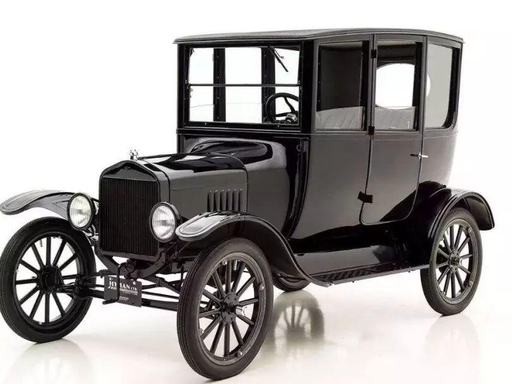
The most famous quote to come out of this era is Henry Ford’s snarky marketing genius: “Any customer can have a car painted any color that he wants, so long as it is black.”
It sounds like a dictator running a monopoly, but it was actually a logistics hack. In the early days, Ford used different paint colors, but they took forever to dry, holding up the line. Ford engineers discovered that Japan Black lacquer dried faster than any other finish. By standardizing to black, they shaved hours off the production time, dramatically lowering costs.
The numbers are staggering. Before the moving line, the Model T cost around $850 (roughly $25,000 today). By 1916, the price dropped to $360. By 1925, it was down to $260. Suddenly, the factory worker could afford the very car he was building.
The Human Cost of Speed
While the balance sheet looked beautiful, the factory floor was loud, repetitive, and mind-numbing.
Before Ford, building cars required high-level craft skills. You were a machinist or a carpenter. After the assembly line, you were a “repetitive-task specialist.” One man spent his entire day just starting nuts on bolts. Another twisted them tight. Another just lifted the hood.
The work was monotonous, leading to a massive problem: turnover. In 1913, Ford had to hire 52,000 workers to keep a workforce of 14,000. People just walked out because they were bored or exhausted.
This brings us to the second most famous Ford innovation, which is often misunderstood as pure charity.
In January 1914, Ford shocked the world by announcing the Five Dollar Day. He effectively doubled the average wage of his workers. The press hailed him as a humanitarian. And he was—partially. But he was also a pragmatist.
“If you want workers to stay in their chairs and stare at that belt for nine hours,” he reasoned, “you have to pay them enough to make it worth their while.” The $5 day reduced turnover, attracted the best laborers, and—crucially—gave those laborers the disposable income to go out and buy the Model T they were building. Ford wasn’t just making cars; he was creating the customers who would buy them.
How the World Changed
The impact of the moving assembly line rippled far beyond Detroit.
1. The Death of the “Horse and Buggy” : By 1918, half of all cars in America were Model Ts. The assembly line democratized travel. It led to suburban sprawl, the motel industry, and the concrete highway systems we take for granted.
2. The Rise of the Middle Class : Mass production meant mass consumption. The techniques Ford pioneered were applied to refrigerators, washing machines, radios, and vacuum cleaners. The assembly line didn’t just build products; it built the modern consumer economy.
3. The Standardization of Time : Before Ford, factory work was sporadic. The moving line dictated the pace. It introduced the tyranny of the clock—but also the structure of the 40-hour work week, which Ford adopted in 1926.
4. Global Warfare : The dark side of the assembly line emerged during World War II. The ability to rapidly produce standardized parts allowed the Allies to practice “arsenal of democracy” logistics. Henry Ford even built the massive Willow Run plant, which churned out a B-24 Liberator bomber every 63 minutes. Without the assembly line, WWII would have looked very different.
The Legacy: From Ford to Toyota to AI
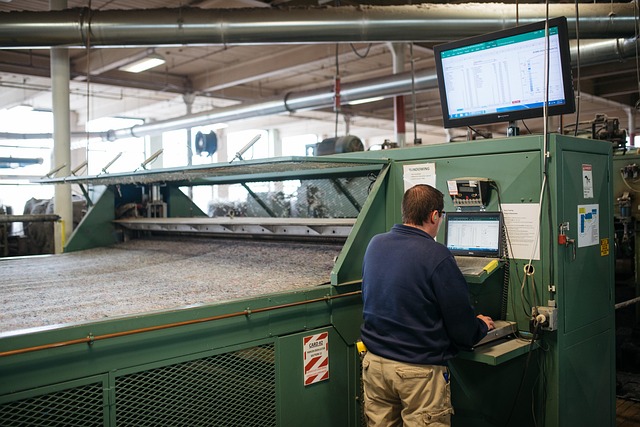
Is the assembly line obsolete? Not quite. Walk into any Tesla or Toyota factory today, and you will still see a chassis moving slowly down a line of robots and specialized workers.
However, the system has evolved. In the 1970s, Toyota studied Ford’s system and fixed its biggest flaw: rigidity. Ford assumed if you made a million black cars, you could sell a million black cars. Toyota introduced “Lean Manufacturing” and “Just-in-Time” (JIT) production, allowing factories to switch between models fluidly.
Today, artificial intelligence is watching those lines, predicting breakdowns before they happen. Robots now work alongside humans. Yet the core principle—breaking complex work into simple, sequential steps to maximize flow—remains 100% Ford.
When the first moving chassis rolled through Highland Park in 1913, Henry Ford probably didn’t realize he had just drawn the blueprint for the 20th century. He was just trying to make a cheap car. In doing so, he taught the world that if you move the work, you move the world.