

SpaceX IPO: A Carnival of Capital Games, or a Solid Step Toward Space AI?
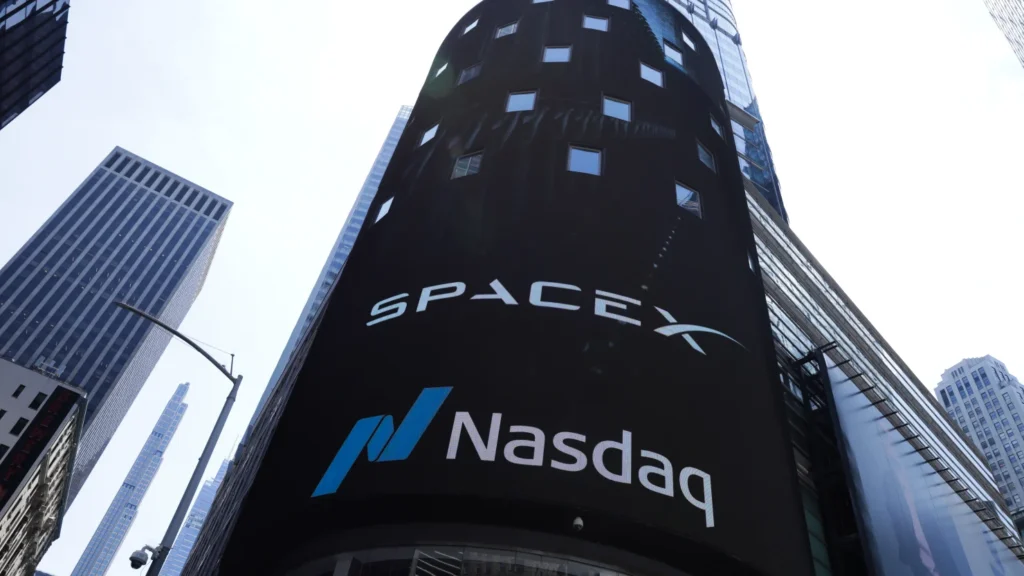
Just two weeks ago, SpaceX went public on the Nasdaq under the ticker “SPCX,” setting a record for the largest IPO in human history. The stock surged from its offering price of $135 to over $160 on its first trading day, only to suffer a 16% single-day crash not long after, bringing it back to its opening-day closing price. This rollercoaster of a ride has sparked a question that every observer is now asking:
Are we witnessing a spectacular carnival of capital games, or a genuine step toward the age of space-based AI?
Perhaps it’s worth approaching this question from two seemingly contradictory angles.
I. The Capital Feast: A Masterfully Staged “Get-Rich Myth”
From a purely financial perspective, this IPO is a textbook success.
First, the “democratization” of participation. SpaceX broke with Wall Street tradition by setting aside as much as 30% of its offering shares for retail investors—a move virtually unheard of in IPOs previously reserved for top-tier institutions. The result? Retail net buying surged to as much as $405 million, even surpassing total purchases for the “Magnificent Seven” tech giants. This isn’t just buying stock—it’s buying into a sense of “joining Musk on a journey to the stars.”
Second, the unprecedented “wealth effect.” At the offering price, the IPO minted over 4,400 millionaires overnight, with roughly 400 employees holding stakes worth more than $100 million. Many early employees acquired their shares at less than $2 apiece. This wealth effect sends a powerful message to top talent in Silicon Valley and beyond: joining a company with the potential to change the world, and sticking with it long-term, remains one of the most potent paths to financial freedom.
Finally, the “halo effect” of narrative and valuation. Before going public, SpaceX had accumulated losses of $41.3 billion and posted a net loss of nearly $5 billion in 2025. In any traditional industry, such financials would be the hallmark of a “junk stock.” Yet the market awarded it an initial valuation of over $1.7 trillion and a price-to-sales ratio exceeding 100x. Why? Because the narrative includes both a cash cow in Starlink and two sci-fi-grade long-term options: “space-based AI data centers” and “Mars colonization.”
On the capital front, the victory is undeniable—it used the power of storytelling to get the market to pay a premium for “what could be.”
II. Where’s the Substance? When “Story” Meets “Gravity”
But this grand narrative of space-based AI data centers faces three nearly insurmountable hurdles in reality.
The curse of physics. Data centers generate enormous amounts of heat. On the ground, we cool them with water and air; in the vacuum of space, cooling relies solely on thermal radiation, which is vastly less efficient. And to power hundreds of megawatts or even gigawatts of computing capacity would require solar arrays spanning an area comparable to several football fields.
The nightmare of maintenance. Space is filled with high-energy radiation that constantly degrades delicate semiconductor chips. On Earth, if a server fails, you replace it; in space, a failed unit becomes an expensive piece of space junk, with no repair crew available to fix it.
The challenge of economics. The cost of putting a single kilogram of payload into orbit remains exorbitant. Building a data center on the ground costs a few billion dollars; building one with equivalent computing power in space could cost orders of magnitude more.
When the market came to realize just how difficult it would be to realize this “long-term option” that underpinned its lofty valuation—and that the company was rushing to issue $20 billion in bonds less than two weeks after going public—the correction was swift and brutal. Hence the 16% crash.
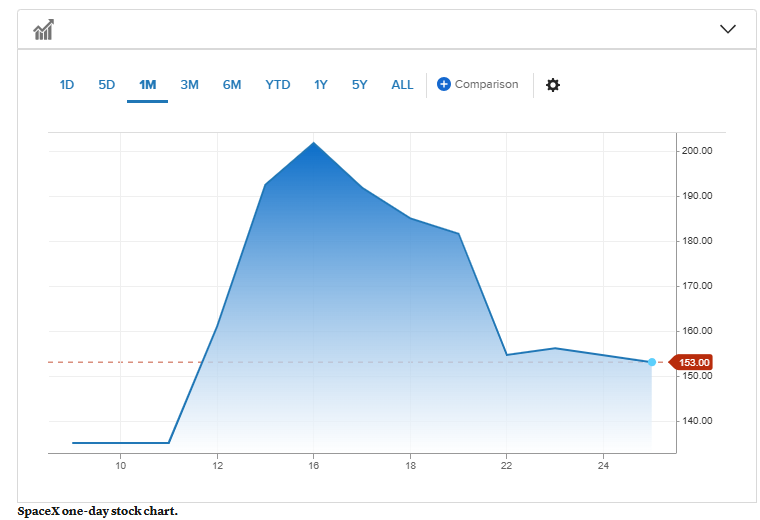
Money votes with conviction, but it also votes with its feet. When a “story” fails to deliver fresh progress updates, the market’s patience is put to the test.
III. To Be Honest: It’s Probably Both
So, back to the original question: Is it a capital carnival, or a solid step forward?
In the here and now, it’s one of the most spectacular capital carnivals ever staged; but over the long arc of time, it also lays a foundation stone for that ambitious goal.
Where does that “foundation stone” lie?
It solves the most pragmatic problem: money. No matter how far-fetched “space AI” may seem, the development of Starship, the build-out of Starlink, and the pursuit of Mars all require astronomically large sums. The IPO has raised tens of billions of dollars in a very short time. That money alone can keep the work of “turning sci-fi into engineering blueprints” going for many more years.
It establishes a sustainable business model: using “cash cows” to fund the dream. Starlink is currently the only profitable segment, channeling commercial revenue back into R&D. Going public gives that virtuous cycle even more fuel.
It galvanizes global intellectual talent. The creation of 4,400 millionaires sends a clear signal to the world: committing yourself to something vast and difficult, and sticking with it, can yield rewards beyond imagination. That is a more powerful recruitment tool for top engineers and scientists than any PR campaign.
Conclusion: Between Romance and Reality
Space has never been purely romantic. Satellites have finite lifespans. Fuel depletion means mission termination. Every orbital adjustment must be calculated with precision to avoid collisions. And then there’s the chilling prospect of the Kessler Syndrome—the point at which the density of debris in Earth’s orbit reaches a critical threshold, triggering a cascade of collisions that could seal off the entire low-Earth orbit. Russia’s internationally condemned anti-satellite test was a real-world warning of that very risk.
Space may be vast, but it is also fragile, and it is governed by the unyielding laws of physics.
SpaceX’s IPO sits at the extreme intersection of romance and reality. It uses the most worldly and calculating of financial instruments to fund the most audacious and far-reaching of visions.
It’s a carnival, because it has set off a grand celebration of capital and public emotion.
It’s also a foundation stone, because it adds some of the most expensive fuel yet to the dream of escaping Earth’s gravity.
Whether that foundation ultimately leads to a true space-based AI empire, or simply to an extraordinarily expensive lesson—that may be the most compelling stress test of our era.