Four Industrial Revolutions: The Inventions That Reshaped Manufacturing
Manufacturing has not evolved slowly and steadily. It has changed in dramatic, world-shaking bursts. Historians and engineers now describe these bursts as four industrial revolutions, and each one was driven by a handful of breakthrough inventions that completely rewrote the rules of production. From steam engines to steam-powered assembly lines, from punch cards to the internet, the story of the Industrial Revolution inventions is really the story of how humanity learned to make things. Let’s take a friendly tour through Industry 1.0 to 4.0 and see what each revolution changed.
Industry 1.0: Steam, Coal, and the First Factories
The first industrial revolution began in Britain in the late 18th century. Before it, most goods were made by hand in homes and small workshops. Skilled artisans, weavers, blacksmiths, and millers produced things one at a time, and production was limited by human muscle, water power, and wind.
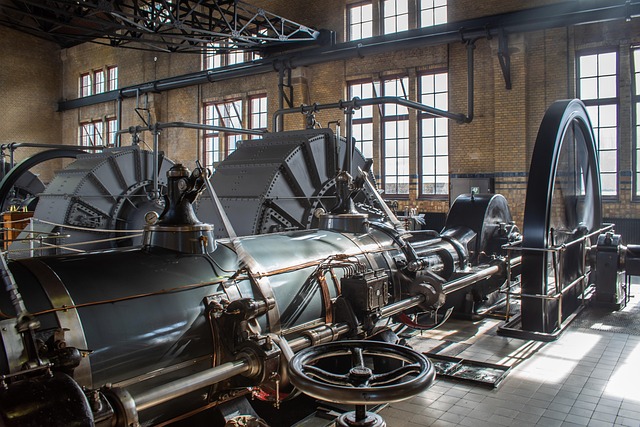
The breakthrough was the steam engine. James Watt’s improved steam engine, patented in 1769 and refined over the following decades, turned coal into mechanical power. Suddenly, factories no longer needed to sit next to rivers for water power. They could be built anywhere coal could be delivered, and they could run machines far more powerful than any human or horse.
The inventions that followed transformed textiles, the most important industry of the era. The spinning jenny, the water frame, and the power loom mechanized the production of cloth, slashing costs and flooding markets with cheap fabric. Iron production was revolutionized by new smelting techniques that used coke instead of charcoal, allowing bridges, rails, and machines to be built on an industrial scale.
The result was the factory system. Workers gathered in centralized buildings, operated machinery, and followed the rhythm of the machines rather than the rhythms of daylight and seasons. It was not a comfortable life, by any means, but it was a different kind of production, one that would spread around the world. Industry 1.0 was the moment manufacturing became industrialized.
Industry 2.0: Electricity, Assembly Lines, and Mass Production
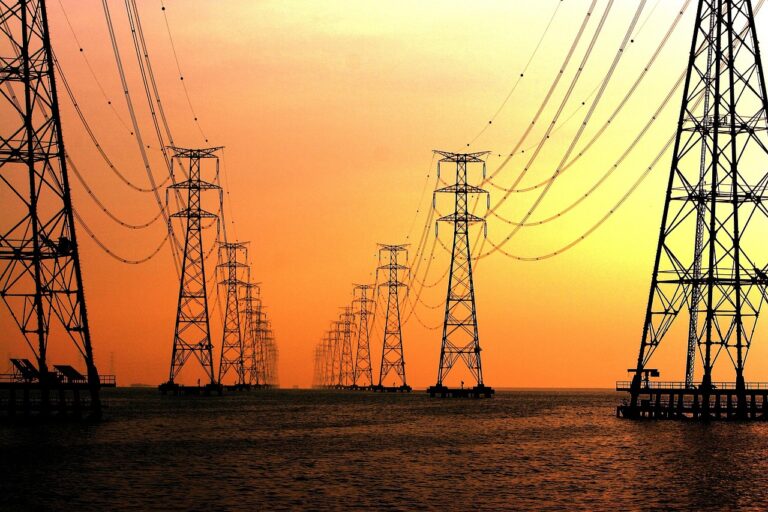
The second industrial revolution, roughly from the 1870s to World War I, was powered by a different force: electricity. Thomas Edison, Nikola Tesla, and their contemporaries built the generators, motors, and distribution networks that allowed factories to be lit, powered, and organized in completely new ways.
Electric motors freed factories from the giant steam-driven shaft systems that had transmitted power through belts and pulleys. Each machine could now have its own motor, giving factory managers far more flexibility in layout. Electric lighting allowed shifts to run around the clock. Communication tools like the telephone and telegraph connected suppliers, factories, and markets.
The most famous manufacturing invention of this era, however, was not electrical at all. It was the moving assembly line, pioneered by Henry Ford at his Highland Park factory in 1913. Ford did not invent the automobile, but he invented a way to build it at scale. By moving the car past stationary workers, each of whom performed a single task, Ford cut the time to build a Model T from over twelve hours to about ninety minutes.
Mass production made goods affordable to ordinary people. The Model T, the sewing machine, the phonograph, and eventually the radio all went from luxury items to household staples. Ford also demonstrated the power of economies of scale: when you make millions of identical products, the cost per unit collapses. Industry 2.0 was the era of mass production, and its influence is still everywhere today.
Industry 3.0: Computers, Automation, and the Digital Seed
The third industrial revolution, which began in the late 1960s and accelerated through the 1980s, is sometimes called the digital revolution. Its driving force was the computer, and its signature invention in manufacturing was the programmable logic controller, or PLC.
PLCs were developed to replace the banks of relays and wiring that controlled factory machines. A PLC is a rugged, industrial computer that can run a sequence of operations, receive inputs from sensors, and control outputs like motors and valves. If a carmaker wanted to change how a production line worked, engineers no longer had to rewire the factory; they just had to reprogram the PLC.
This was a huge deal. Automation, the use of machines to perform tasks automatically, exploded. Industrial robots, first introduced by Unimate at a General Motors plant in 1961 and popularized by companies like Fanuc, KUKA, and ABB, took over welding, painting, and heavy lifting. Computer numerical control, or CNC, machines allowed complex parts to be cut with precision that no human hand could match.
The digital seed planted in Industry 3.0 is still growing. Computers made it possible to design products on screens, simulate their behavior, and control machines with software. The factory floor, which had been purely mechanical and electrical, began to fill with data. No one knew it yet, but that data would become the raw material of the fourth revolution.
Industry 4.0: Cyber-Physical Systems and Connected Factories
The fourth industrial revolution is happening right now. Coined in 2011 at Germany’s Hannover Fair, the term Industry 4.0 describes the fusion of the physical factory with the digital world. In an Industry 4.0 factory, machines, parts, and systems are connected to each other and to the internet, sharing data in real time.
The key technologies are the Internet of Things, or IoT, artificial intelligence, cloud computing, digital twins, and advanced robotics. Sensors on machines stream data about temperature, vibration, energy use, and output. AI systems analyze that data to predict failures before they happen. Digital twins, virtual copies of physical machines and factories, let engineers test changes in a computer before touching the real equipment.
Imagine a factory where a machine detects that its cutting tool is wearing out, orders a replacement automatically, and schedules its own maintenance during the night shift. Imagine production schedules that adjust themselves when a customer changes an order. Imagine quality inspections performed by cameras and AI that catch defects invisible to the human eye. That is Industry 4.0 in action.
The inventions driving this revolution are not single machines like the steam engine; they are systems, networks, and algorithms. The factory is becoming less like a collection of independent machines and more like a single, intelligent organism. This revolution is still in its early stages, and its full effects will play out over the coming decades.
The Thread That Connects Them
Looking at Industry 1.0 to 4.0, a clear pattern emerges. Each industrial revolution inventions era solved a different problem. The first revolution solved the problem of power, replacing muscle with steam. The second solved the problem of scale, replacing craft production with mass production. The third solved the problem of control, replacing manual operations with automation. The fourth is solving the problem of intelligence, replacing static factories with adaptive, self-optimizing systems.
Each revolution also created massive disruption. Craftspeople lost livelihoods to factories, factory workers were displaced by robots, and now routine mental work is being augmented by AI. Yet each revolution ultimately created more new jobs, products, and possibilities than it destroyed, though the transition was never easy.
Historians are already debating what comes next. Some talk about Industry 5.0, which emphasizes human-machine collaboration and sustainability. Others talk about the fifth industrial revolution, driven by breakthroughs in materials, biology, and quantum computing. Whatever it is called, it will build on the foundation laid by the first four.
Why History Matters for Manufacturing Today
Understanding the four industrial revolutions is not just an academic exercise. It helps engineers and business leaders recognize where their industry stands and what is coming next. A factory running on Industry 2.0 principles, mass production with human-operated machines, faces a very different competitive landscape than a factory embracing Industry 4.0 connectivity.
The great lesson of this history is that the pace of change is accelerating. The first industrial revolution took decades to unfold. The second took about half a century. The third took a generation. The fourth is transforming manufacturing in years, not decades.
The Industrial Revolution inventions of the past, the steam engine, the assembly line, the PLC, are now part of the furniture of modern life. The inventions of the present, connected sensors, AI, digital twins, are still being written into the history books. One thing is certain: whoever masters the current revolution will shape the factories of tomorrow, and the story will continue from there.