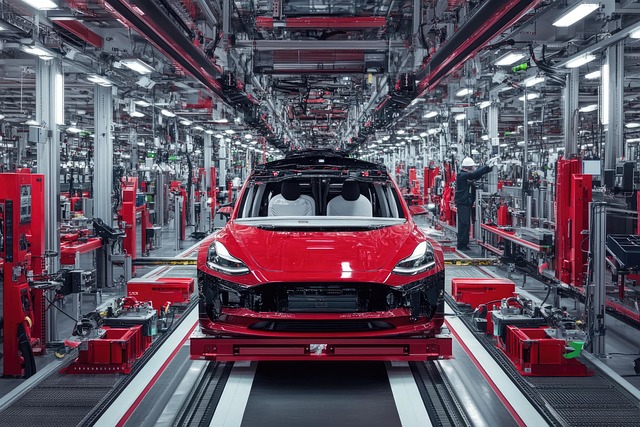
What Metal Are Cars Made Of? A Friendly Tour of Automotive Materials
Quick question: what’s your car actually made of? If you said “metal,” you’re right — but not entirely. A modern car is a carefully engineered mix of steels, aluminum, plastics, glass, rubber, and even exotic stuff like carbon fiber. And the recipe matters a lot: it decides how safe your car is in a crash, how much gas (or electricity) it uses, and how much it costs to build. Let’s take a relaxed stroll through the materials that make up the machine you drive.
Steel: still the backbone
When people picture a car body, they’re usually picturing steel — and for good reason. Steel, in its many forms, still makes up the majority of a typical car’s weight: usually around 50 to 60 percent. The steel industry has been the auto industry’s best friend for over a century, and the relationship isn’t fading.
The real star today is high-strength steel. Ordinary mild steel is strong enough, but it’s heavy. High-strength and ultra-high-strength steels pack more strength into thinner sheets, so automakers can build a stiffer, safer body without adding weight. A modern car’s safety cage — the part that protects you in a crash — is largely made of ultra-high-strength steel that can be five times stronger than the mild steel of old cars. Those strong “A-pillars” and “B-pillars” you see in crash-test videos? That’s high-strength steel doing its job.
Steel also wins on cost. It’s cheap, recyclable, easy to weld, and available everywhere. That’s why even the most advanced electric vehicles still use a steel frame with aluminum or composite panels bolted on top.
Aluminum: the lightweight challenger
If steel is the heavyweight champ, aluminum is the fast, agile contender. Aluminum is about one-third the weight of steel for the same volume, and it has been steadily stealing jobs from steel in cars for decades.
You’ll find aluminum in engine blocks, cylinder heads, wheels, and suspension components — anywhere weight savings pay off. In recent years, it’s moved to body panels too: hoods, doors, trunks, and even entire bodies. Premium vehicles like the Audi A8 and the Ford F-150 (which switched to an aluminum body a few years ago) show just how far the metal has come.
Why is aluminum so appealing? Lighter cars use less fuel and get better EV range, accelerate quicker, and stop shorter. Aluminum also resists corrosion better than bare steel, and it’s highly recyclable — recycling aluminum uses only about 5 percent of the energy needed to make it from raw ore.
The catch? Aluminum is more expensive than steel, harder to weld, and easier to dent. That’s why most cars use it selectively rather than for everything. A typical modern car might be 15 to 30 percent aluminum by weight, with that share growing in electric vehicles, where every kilogram of weight savings translates directly into more driving range.
Magnesium: the featherweight
Want to go even lighter than aluminum? Meet magnesium. It’s about 25 percent lighter than aluminum and 75 percent lighter than steel, making it the lightest structural metal around. Engineers love it for parts like steering wheels, seat frames, and instrument-panel supports — components where you can save weight without needing huge strength.
Magnesium does have quirks: it’s expensive, flammable in powder form, and prone to corrosion if not properly coated. So it stays a supporting player — a few dozen pounds per car at most — but automakers keep finding clever new places to use magnesium alloys as they hunt for every gram of savings.
Plastics and composites: more than you think
Here’s a surprise: a modern car is roughly 10 to 15 percent plastic by weight. Bumpers, dashboards, door panels, trim, and dozens of hidden parts are made of engineered plastics. They’re cheap, lightweight, rust-proof, and easy to shape into complex designs — which is why plastic bumpers (often made of polypropylene) can absorb minor impacts and bounce back.
Then there’s the superstar of advanced materials: carbon fiber. Carbon fiber composite is incredibly strong and light — about five times stronger than steel at a fraction of the weight. It’s the material of Formula 1 cars, supercars, and some premium electric vehicles, where maximum performance is the goal.
The problem is price. Carbon fiber is expensive to make and slow to produce, so it shows up mostly in luxury and performance cars, plus a few high-end EV battery enclosures. As manufacturing costs drop, expect to see more of it — but for the foreseeable future, it’s the caviar of car materials, not the daily bread.
The anatomy of a modern car’s materials
To see how this all comes together, picture a typical mid-size family car and its roughly 1.5-ton (3,300 lb) weight budget. Steel still claims the biggest share — around 50 to 60 percent — mostly in the body structure, floor pan, frame rails, and safety cage. Aluminum usually takes 10 to 25 percent, split between the engine, wheels, suspension arms, and often the hood and doors. Plastics and composites account for about 10 to 15 percent: bumpers, dashboards, interior trim, and hidden structural parts. Glass adds around 3 percent in the windshield, side windows, and rear window. Then come rubber (tires, hoses, seals), copper (wiring and electric motor windings), fluids, and a long tail of specialized materials — from the rare-earth magnets in EV motors to the catalytic metals in your exhaust.
Every one of those percentages is a deliberate choice. Lift a hood and you’ll see the pattern in action: steel fenders for strength, an aluminum engine block for weight savings, plastic intake manifolds for cost, and rubber mounts to isolate vibration. The engineers didn’t pick these materials randomly — each one is there because it’s the best balance of strength, weight, cost, and durability for its specific job.
Titanium and other exotic metals
Mention “titanium” and car enthusiasts start drooling. Titanium is as strong as steel but about 45 percent lighter, and it laughs at corrosion. In production cars, you’ll mostly find it in high-end exhaust systems and fasteners — places where its heat resistance and strength shine.
There are also quiet heroes like copper (lots of it in wiring and electric motors) and rare-earth magnets (in EV motors). And don’t forget glass — about 3 percent of a car’s weight — and rubber in tires and hoses. A car is truly a buffet of materials.
Why the mix matters: safety, efficiency, and cost
So why don’t automakers just pick one perfect material? Because there isn’t one. The engineering trick is matching the right material to the right job:
Safety needs steel. Crash energy has to be absorbed by crumple zones (usually mild steel) while a stiff cage (high-strength steel) protects the cabin.
Efficiency needs aluminum and magnesium. Cutting weight improves fuel economy and EV range — which is why EVs lean extra hard on lightweight materials to offset their heavy batteries.
Affordability needs steel and plastic. You can’t sell a $25,000 car if it’s made of carbon fiber. Material cost is one of the biggest factors in a car’s price.
The industry’s mantra is “the right material in the right place.” Every pound saved, every dollar trimmed, and every ounce of safety gained is the result of automakers constantly rebalancing this material equation.
Quick FAQs
Is aluminum stronger than steel? Not weight-for-weight on strength, but pound-for-pound it’s often the better deal. High-strength steel remains the strongest option for crash cages.
Are cars rust-proof now? Not completely, but much better than before. Galvanized (zinc-coated) steel, e-coat paint, and aluminum panels have dramatically reduced rust on modern cars.
Why don’t all cars use carbon fiber? Cost and production speed. Carbon fiber remains several times more expensive than steel or aluminum, and it’s slower to manufacture at scale.
Which metal is the strongest? Among common car materials, ultra-high-strength steel — some grades exceed 1,500 megapascals of tensile strength, enough to hold up a small building.
Why are electric cars heavier than gas cars? Mostly because of the battery pack, which can weigh 400–700 kg (900–1,500 lb) alone. Automakers compensate with aluminum and composite body panels, but EVs still tend to be heavier overall — which is one more reason lightweight materials matter so much in the EV era.
Do automakers ever use magnesium for body panels? Rarely — it’s too expensive and corrosion-prone for large panels. You’ll find it in smaller structural parts like seat frames and steering wheels, where the weight savings matter and the risks are manageable.
The bottom line
Your car is a beautifully balanced recipe of materials: high-strength steel for safety, aluminum for lightness, magnesium for trimming grams, plastics for flexibility and affordability, and carbon fiber for the occasional splurge. Automakers are constantly tweaking the mix to make cars safer, more efficient, and more affordable. So next time someone asks what metal a car is made of, the honest answer is: steel, aluminum, magnesium, and a whole lot of clever engineering.