The Future of Manufacturing: How AI and Innovation Are Reshaping Industry in 2026 and Beyond
When I started following manufacturing trends about a decade ago, the conversation was mostly about “automation” and “offshoring.” Today, the conversation has completely changed. Walk into any modern factory, and you’ll find robots making decisions, digital twins predicting machine failures before they happen, and sustainability isn’t just a buzzword—it’s how you stay competitive.
Having digested the latest industry reports and policy moves from across the globe, I want to break down what’s actually happening in manufacturing right now, where it’s going, and what it means for businesses, workers, and consumers. This isn’t your grandfather’s factory anymore—it’s a tech-enabled, intelligent ecosystem, and the pace of change is only accelerating.
1. AI Moves From the Boardroom to the Production Line
For the past few years, artificial intelligence in manufacturing felt like a “rich company problem.” Only the biggest players like Siemens or Foxconn could afford to experiment with smart factories. That’s changed in 2026—AI is going mainstream, and it’s not just for the Fortune 500 anymore.
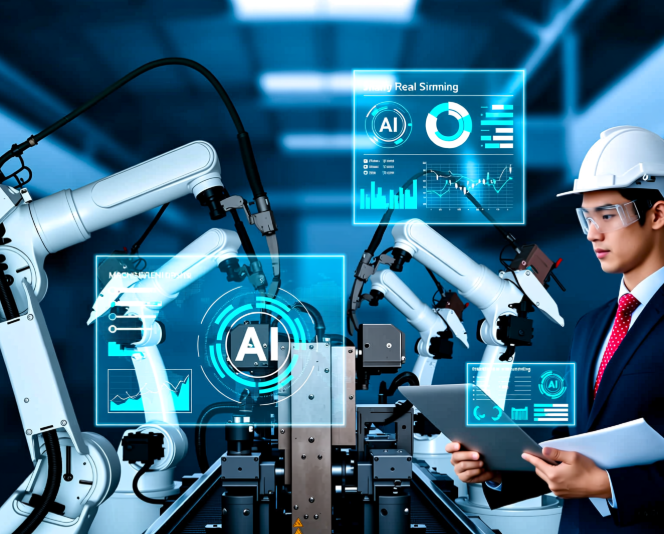
The biggest shift I’m seeing is the combination of embodied intelligence and industrial large language models. Previously, industrial robots were really good at repeating the same exact movement over and over again—but that’s it. If you wanted to change the product, you had to re-program the entire system, which took days or weeks. Now, with large language models integrated into robotic systems, you can literally tell the robot “I need you to switch from producing Part A to Part B” and it adjusts its own programming. That’s a game-changer for small and medium-sized manufacturers who don’t have teams of robotics engineers on staff.
According to China’s Ministry of Industry and Information Technology, the government is pushing to roll out 1,000 industrial AI agents and 500 typical application scenarios by 2027, covering everything from steel production to machinery manufacturing. This isn’t just about technology for technology’s sake—the numbers speak for themselves. Companies that have adopted these AI-driven systems are seeing 20-30% reductions in downtime, 15% improvements in productivity, and significant quality improvements because the AI catches defects humans miss.
Another interesting development is the rise of the industrial ontology middle platform. In the past, manufacturing companies had tons of data—from machine sensors, from quality control, from supply chains—but it was all scattered in different systems, and AI couldn’t really make sense of it. The ontology middle platform organizes all that data into a knowledge graph that the AI can actually understand, turning it from “report generation” to actual process analysis and decision support. Sany Heavy Industry, for example, has built the world’s largest engineering machinery ontology library, which now powers predictive maintenance across their global fleet. When a machine part is going to fail, the AI knows before it happens, and the maintenance team can fix it during a scheduled stop instead of dealing with an unexpected shutdown that costs tens of thousands of dollars per hour.
2. The Humanoid Robot Revolution Is Actually Here (Seriously)
If you follow tech news, you’ve been reading that “this year is the year of the humanoid robot” for about five years now. Well, I’m here to tell you—2026 actually looks like the real deal. After years of R&D and testing, we’re finally seeing mass production starting, and that’s going to have ripple effects across the entire manufacturing ecosystem.
Tesla’s Optimus program has been making steady progress, and while it’s not putting millions of human workers out of jobs (yet), it’s proving that humanoids can handle repetitive, dangerous tasks on assembly lines. The real story isn’t just Tesla though—it’s the entire supply chain that’s developing around humanoids. Companies across the globe are now scaling up production of key components like servo motors, harmonic reducers, sensors, and joint modules. As production volume increases, prices are coming down fast, making humanoids economically viable for more applications.
What’s really interesting is that humanoids aren’t just replacing human workers—they’re taking over the jobs humans don’t want to do. Think about heavy lifting in uncomfortable positions, working in extreme temperatures, handling hazardous materials. These are jobs that manufacturers have been struggling to fill for years anyway. Humanoids solve that labor shortage problem while allowing humans to move into more skilled, higher-paying roles like maintenance, programming, and quality management.
The market opportunity here is massive. By some estimates, the humanoid robot market could be worth hundreds of billions of dollars within the next decade, and manufacturing is going to be one of the biggest use cases. We’re not going to see factories full of humanoids tomorrow—it’s going to be a gradual adoption over the next 5-10 years—but the tipping point is here now.
3. Supply Chain Reconfiguration: Nearshoring, Resilience, and the New World Order
If there’s one thing that’s reshaped manufacturing over the past five years more than anything else, it’s supply chain reconfiguration. After COVID-19 showed us just how fragile global supply chains are, and with increasing geopolitical tensions, companies are rethinking their entire approach to where they produce goods.
We’re seeing two big trends happening simultaneously. On one hand, there’s the reshoring/nearshoring trend where Western companies are moving production back closer to home, either to North America or to nearby countries like Mexico for US companies, or Eastern Europe for Western European companies. On the other hand, Chinese manufacturers are moving up the value chain and gaining market share in high-value sectors like heavy machinery, electric vehicles, and aerospace.
What’s really interesting is that this isn’t a zero-sum game. Yes, some low-value manufacturing has moved to other countries with lower labor costs, but China is now dominating higher-value segments. Chinese construction equipment manufacturers, for example, have been gaining massive market share globally because they offer better performance at lower prices with better service than their Western competitors. Overseas infrastructure investment is driving huge demand for Chinese construction equipment, and that’s not slowing down.
At the same time, we’re seeing the rise of intelligent supply chains. With AI and IoT technology, companies can now track every component from raw material to finished product in real-time. If there’s a disruption somewhere in the supply chain, the AI can automatically reroute shipments and adjust production schedules to minimize the impact. Resilience isn’t just about where you locate your factories—it’s about having the technology to adapt quickly when things go wrong.
4. Green Manufacturing: Sustainability Isn’t Optional Anymore
Let’s be honest—for a long time, “sustainable manufacturing” felt like something companies only talked about in their ESG reports to impress investors. That’s completely changed now. Rising energy costs, consumer demand for green products, and government regulations are pushing sustainability to the top of the priority list for every manufacturer.
The trend here is fully green intelligent manufacturing that focuses on energy calculation coordination and low-carbon closed loops. Factories are installing smart sensors that track energy use in real-time, and AI systems that optimize production schedules to minimize energy consumption when electricity prices are high. Companies are also rethinking their entire supply chains to reduce carbon emissions—from sourcing raw materials locally when possible to using more recycled materials in their products.
Governments around the world are pushing this transition too. In the US, the Inflation Reduction Act offers massive tax credits for clean energy manufacturing and energy efficiency upgrades. In the EU, the Carbon Border Adjustment Mechanism puts a carbon price on imported goods, which pushes manufacturers around the world to reduce their emissions. In China, the government has made achieving carbon neutrality a top priority, and there’s significant investment in green manufacturing technologies.
The good news is that going green often saves money in the long run. When you reduce energy use, you lower your operating costs. When you use more recycled materials, you’re less dependent on volatile commodity prices. Consumers are also willing to pay more for products that are made sustainably—so it’s not just a cost, it’s an investment in brand loyalty and market share.
5. Emerging Industries Are Creating Entire New Manufacturing Sectors
One of the most exciting things about manufacturing right now is that entirely new industries are being created that didn’t really exist five years ago, and that’s creating massive new opportunities for manufacturers. Let me highlight a few that are really taking off in 2026:
Low-altitude economy: That’s the industry around electric vertical takeoff and landing (eVTOL) aircraft, drones, and other low-altitude vehicles. Governments around the world are opening up low-altitude airspace, and companies are working on everything from delivery drones to air taxis. This is creating huge demand for specialized manufacturing—lightweight materials, electric propulsion systems, avionics, and more. It’s a brand new market that’s expected to be worth trillions of dollars in the coming decades.
Semiconductors: After the global chip shortage during COVID, everyone understands how important semiconductor manufacturing is. There’s massive investment going into new semiconductor fabs around the world, and that’s creating huge demand for manufacturing equipment, materials, and specialized components. We’re seeing a lot of progress in domestic semiconductor manufacturing in multiple countries, and that’s going to create a whole new ecosystem of suppliers and manufacturers.
Biopharmaceuticals: Biotech and pharmaceutical manufacturing has advanced by leaps and bounds in recent years. New technologies like continuous manufacturing and AI-driven drug discovery are speeding up the production of new drugs and reducing costs. This sector is constantly evolving, and there’s always demand for more manufacturing capacity with new capabilities.
New energy: Whether it’s solar panels, wind turbines, batteries for electric vehicles, or new types of energy storage, new energy manufacturing is booming. As the world transitions away from fossil fuels, we’re going to need massive amounts of new equipment, and that means huge opportunities for manufacturers who can scale up quickly.
What’s interesting about these emerging industries is that they’re all high-value, technology-intensive sectors. They don’t compete on low labor costs—they compete on technology, innovation, and quality. That’s a big part of how manufacturing is evolving overall—moving away from low-cost commodity production towards high-value, innovative products.
6. Industry 5.0: Putting Humans Back in the Center
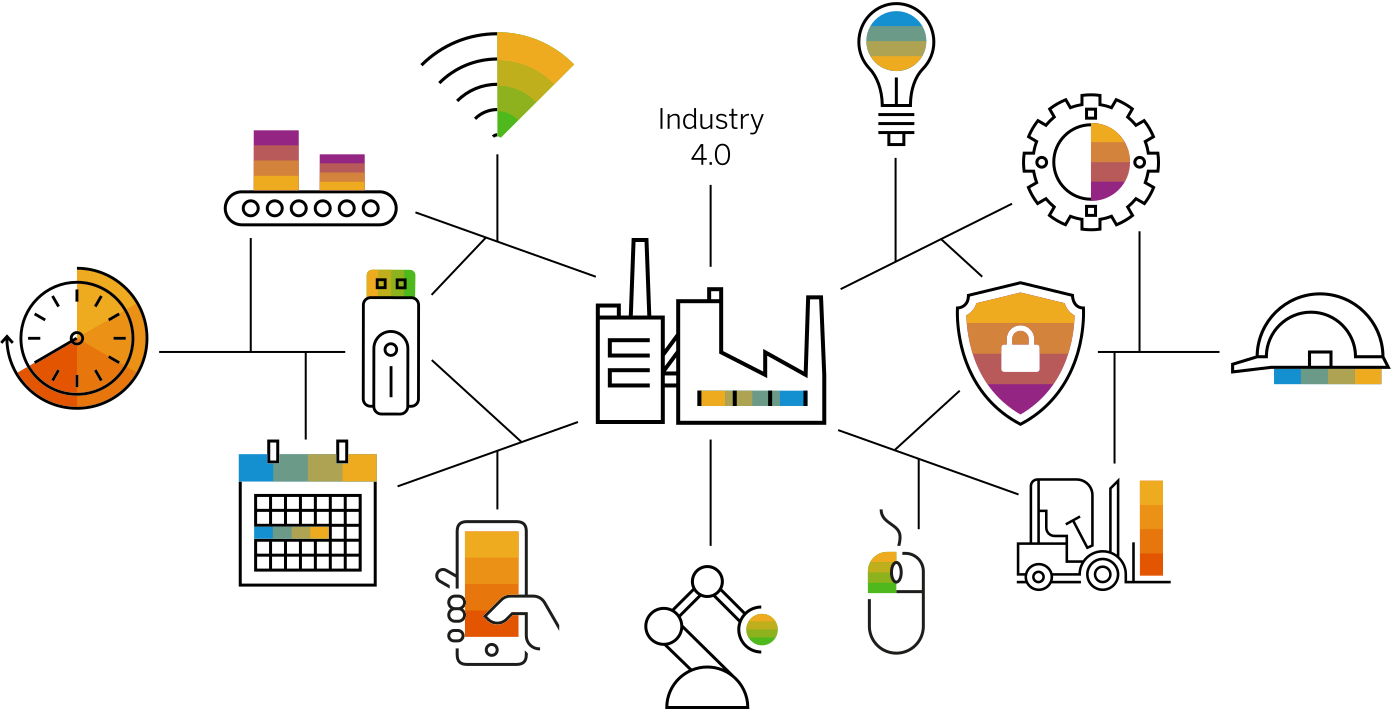
You’ve probably heard of Industry 4.0—that was all about automation, connectivity, and digitalization. Now people are starting to talk about Industry 5.0, and it’s all about putting humans back at the center of manufacturing.
The idea behind Industry 5.0 is that automation and AI are tools to help human workers, not just replace them. It’s about creating manufacturing systems that combine the strengths of AI and robots—repetition, precision, working with heavy loads—with the strengths of humans—creativity, problem-solving, adaptability. So instead of having a factory full of robots with just a few human technicians, you have humans working alongside collaborative robots (cobots) that help them get the job done better and safer.
This approach also focuses more on customization. With flexible manufacturing systems, it’s now economically possible to do mass customization—producing customized products at close to mass production prices. That means consumers can get products that are exactly what they want, and manufacturers can charge more for that customization. Industry 5.0 is all about serving individual customer needs while still being efficient.
Sustainability is also a core part of Industry 5.0—it’s not just about making products efficiently, it’s about making them in a way that’s sustainable for the planet and respects the well-being of workers. That means safer working conditions, better work-life balance, and more opportunities for skill development. After all, even with all the AI and robots, manufacturing still depends on skilled human workers, and keeping those workers happy and healthy is key to long-term success.
What Does All This Mean for the Future?
Looking at all these trends, one thing is clear: manufacturing isn’t dying—it’s transforming. Yes, some low-skill, low-value jobs are disappearing, but new high-skill, high-wage jobs are being created in their place. The factories of the future won’t be empty—they’ll be staffed by skilled workers who know how to work with AI and robots, and those jobs are going to be better than the old manufacturing jobs.
For businesses, the message is clear: you either adapt or you get left behind. The good news is that technology is more accessible than it’s ever been before. Cloud computing means you don’t have to invest millions in IT infrastructure upfront, and AI tools are getting cheaper and easier to use all the time. Even small manufacturers can now afford to adopt smart manufacturing technologies that were only available to big companies 10 years ago.
For policymakers, the challenge is to support this transition. That means investing in education and vocational training to help workers develop the skills they need for the factories of the future. It means supporting research and development in new technologies. It means creating incentives for companies to invest in green manufacturing and digital transformation.
For consumers, this transformation means better products, more choices, and lower prices. When manufacturing is more efficient, that gets passed on to consumers. When you have mass customization, you can get products that are exactly what you want. And when manufacturing is more sustainable, we all benefit from a cleaner environment.
Closing Thoughts
I’ve been following the manufacturing industry for a long time, and I’ve never been more excited about the future. The pace of innovation today is incredible—we’re seeing new technologies and new applications coming to market every single month. What was science fiction 10 years ago is reality today, and what’s reality today will be commodity in 10 years.
Yes, there are challenges—geopolitical tensions, supply chain disruptions, the need to transition to clean energy, helping workers adapt to new jobs. But the manufacturing industry has always been good at adapting to challenges, and I have no doubt it will adapt to this ones too.
The future of manufacturing isn’t about replacing humans with machines—it’s about humans and machines working together to create better products, better jobs, and a better world. And that’s a future I’m really excited to see unfold.